
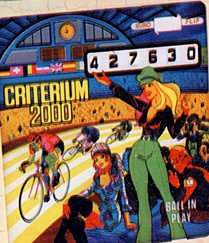
Criterium 2000, a quirky electromechanical gem from the Spanish manufacturer Recel, captures the frantic energy of professional cycling in a compact, vintage package. Released during an era when manufacturers were experimenting with ways to translate athletic competition into mechanical play, this single-player machine replaces the standard stadium aesthetic with a velodrome-inspired challenge. The playfield is anchored by two traditional flippers, but the real test of endurance comes from navigating the six standup targets and the trio of captive balls that force the player to maintain a steady, rhythmic pace—much like a peloton navigating a tight mountain pass.
The machine’s layout is deceptively simple, yet it demands precise ball control to activate its primary scoring features. The playfield integrates a spinning target that simulates the momentum of a race, while three strategically placed kick-out holes act as speed traps that can either boost your score or stall your progress. A quintessential feature of this era is the up-post nestled between the flippers; it serves as a vital defensive tool for the savvy player, allowing for a momentary pause to reset a shot or execute a controlled trap when the action on the playfield becomes too chaotic.
While Criterium 2000 lacks the digital complexity of modern machines, its reliance on mechanical reels and tactile feedback makes it a high-stakes endurance test. Success on this table requires mastering the geometry of the two pop bumpers and the slingshots to keep the ball in play long enough to rack up the multipliers. By balancing the risk of hitting the captive balls against the rewards hidden within the kick-out holes, players can experience a surprisingly intense simulation of a race, proving that even a humble EM machine can pack the intensity of a grand tour.