
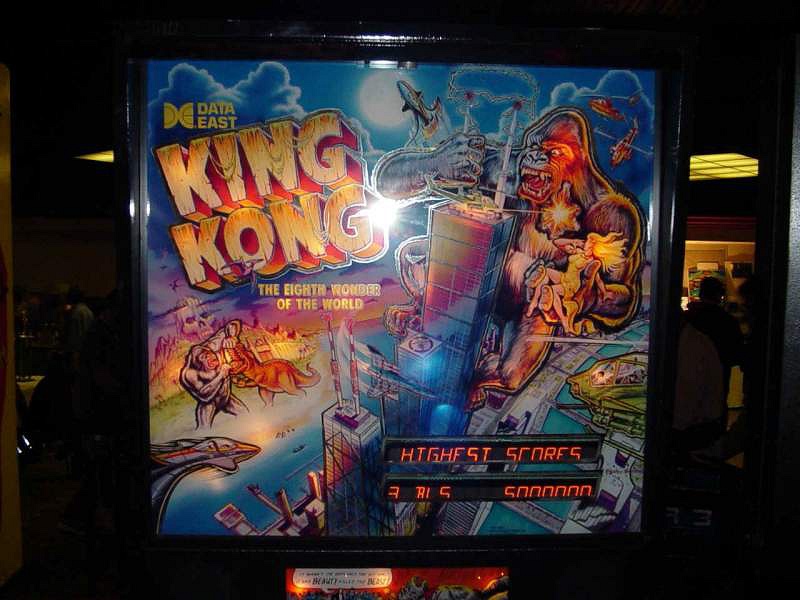
King Kong, produced by Data East in 1990, stands as one of the rarest specimens in the history of pinball manufacturing. Designed by Jerry Armstrong, this alphanumeric machine is a true “white whale” for collectors, with a confirmed production run of only nine units. While the game features a modest mechanical layout—anchored by three flippers and a trio of pop bumpers—its scarcity transforms it from a simple playfield into an essential artifact of the late 80s and early 90s Data East era.
The machine leans heavily into the classic cinematic lore of the giant ape, brought to life through the distinct artistic vision of Kevin O’Connor and the atmospheric audio work of Brian Schmidt. Despite its limited physical existence, the game serves as a time capsule for an experimental period in the industry where specialized licensing was beginning to shape the arcade landscape. For the few who have encountered one in the wild, the gameplay experience is defined by its brutal rarity and the challenge of mastering a layout that remains largely undocumented in the annals of common play.
Because of its extremely low distribution, strategic consensus is virtually non-existent, making the machine a blank slate for those lucky enough to step up to the lockdown bar. With its classic alphanumeric display and straightforward mechanical architecture, King Kong represents the ultimate pursuit for the completist. It remains a fascinating footnote in Data East’s catalog, proving that in the world of pinball, sometimes the most legendary machines are the ones that almost nobody has ever actually played.