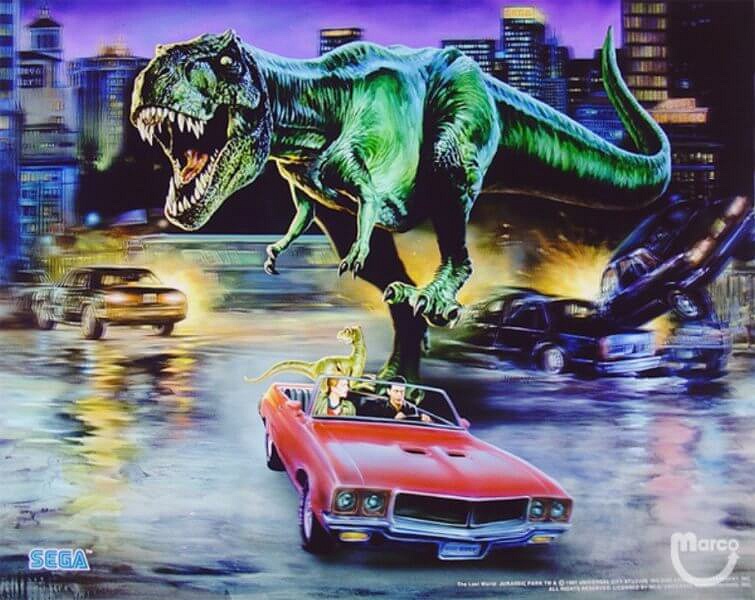
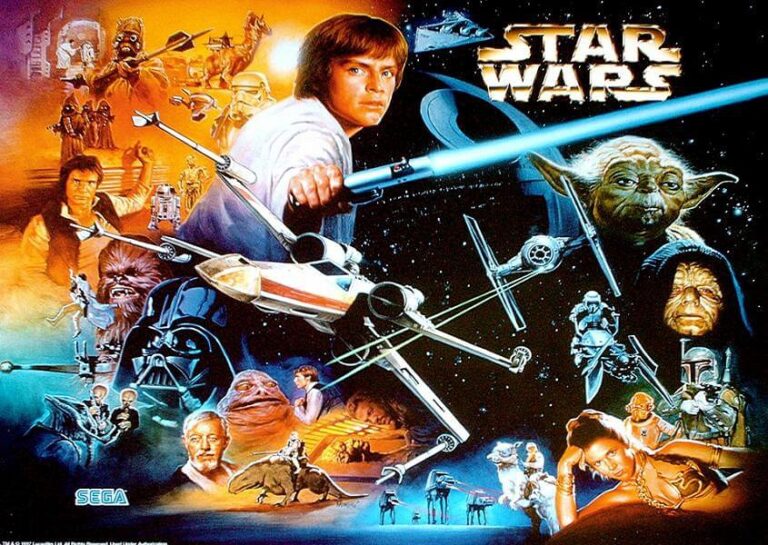
Sega Pinball was established in 1994 when the Japanese video game titan acquired the physical assets of Data East Pinball. Looking to expand its coin-op arcade dominance beyond the video screen, Sega took over the design team spearheaded by Gary Stern and Joe Kaminkow. Under Sega’s umbrella, the factory continued its tradition of producing loud, high-energy, licensed-themed pinball machines designed to grab the attention of rowdy 90s arcade-goers.
Sega didn’t just inherit Data East’s tech; they actively pushed the physical hardware to its absolute limits, introducing innovations that are still revered by competitive players and collectors today:
The Jumbo DMD: For titles like Batman Forever (1995) and Baywatch (1995), Sega introduced an oversized 192×64 dot-matrix display—nearly twice the size of standard industry displays—offering unprecedented real estate for custom animations.
The Whitestar System: Sega engineered the robust Whitestar hardware architecture to drive their sound and game code. This system was so reliable that it became the foundational backbone for the first decade of Stern Pinball machines.
Despite their technological bravado and strong sales from key titles, Sega Pinball faced insurmountable headwinds as the late-1990s arcade market collapsed under the weight of home gaming consoles. Seeking to exit the physical manufacturing business in 1999, Sega sold the division back to Gary Stern.
Rebranding the factory as Stern Pinball, Inc., Gary preserved the staff, the design talent, and the hardware engineering that had been cultivated across the Data East and Sega eras. While the Sega Pinball marquee was short-lived, its DNA acts as the direct bridge to the modern era of pinball.