
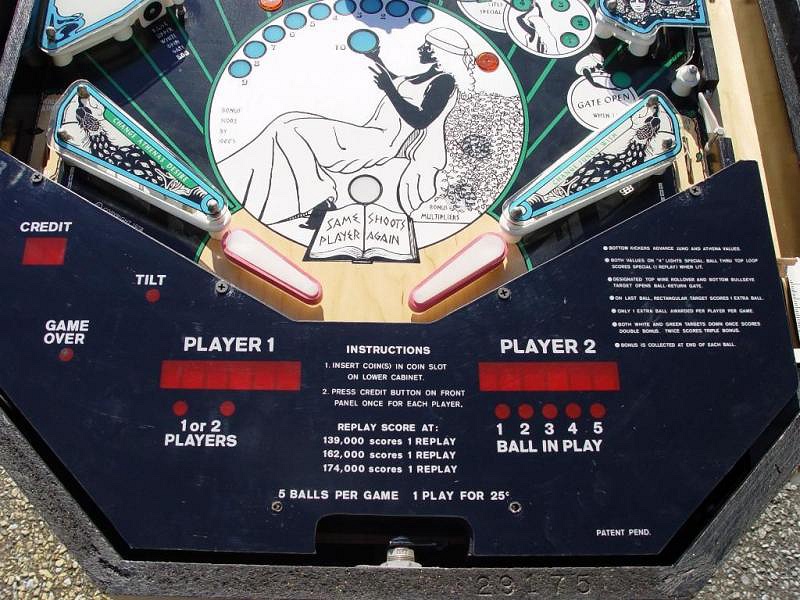
Flame of Athens, released by Allied Leisure, stands as a curious relic of the late 1970s transition into solid-state technology. Designed as a cocktail table, this machine rejects the traditional upright cabinet in favor of a low-profile, glass-topped footprint intended for the social atmosphere of a lounge or tavern. With its alphanumeric display and distinct Grecian aesthetic, the game offers a unique, intimate playing experience where the action occurs directly under the player’s fingertips rather than across a distant, vertical playfield.
While many machines of the era focused on expansive backglass narratives, the Flame of Athens keeps its focus tight, providing a robust five-ball experience for just a quarter. The cocktail cabinet design forces a change in perspective; the player must lean into the playfield to track the ball’s movement across the surface, creating a more tactile and enclosed environment. The art, credited to R., complements the theme with a stylized, classical look that feels right at home in the retro-futuristic landscape of early solid-state arcade gaming.
Because of its specialized form factor, this machine is less about complex mission modes and more about the fundamental rhythm of the game. For those looking to master the table, the key is to account for the unique sightlines provided by the table-top glass, which can often obscure the lower playfield components if you aren’t positioned correctly. It serves as a fascinating piece of history for collectors who appreciate the experimental era of arcade design, proving that even in the early days of electronic pinball, manufacturers were willing to take risks with how players physically interacted with the game.