
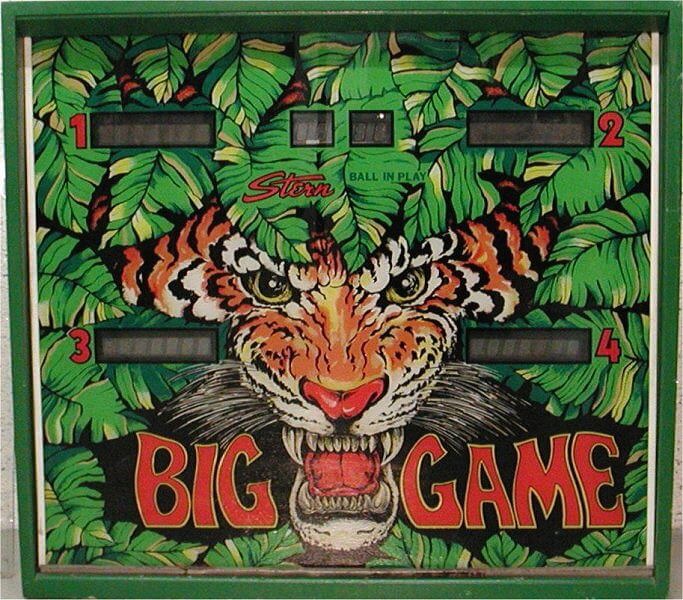
Here’s a true cornerstone of pinball history — Stern Electronics’ 1980 Big Game, designed by none other than Harry Williams, the founding father of the entire industry, late in his storied career. This safari-themed four-player carries a confirmed run of 2,713 and a tidy early-solid-state layout: four flippers, three pops, a trio of three-bank drops, a pair of spinners, and a clever bingo-card scoring scheme that gives the game more depth than its age suggests. Gerry Simkus and Doug Watson handled the art, and Alan McNeil — later famous in video-game lore — wrote the code.
The hunt centers on that far-left spinner, the engine of every strong game. Hit it repeatedly, ideally from the bottom-right flipper which strikes it harder than the awkward top-right, and work to complete the top lanes. The bingo-card mechanic is the clever wrinkle: switch hits like the pops and the center star rollover shift the lit bingo card, and getting the X card lit juices that left spinner for bigger value per shot. Completing BIG in the top lanes lights a second spinner for even more points. For the bonus chase, lighting full cards or making lines across them climbs your multiplier — two-times for one full card, three-times for two — and that bonus holds ball to ball, a meaningful edge over a long game. A sly little post pass can shuttle the ball to the right flipper when you need it.
Big Game is a window into the dawn of solid-state design, the work of a master still tinkering decades into the craft he helped invent. Feed that spinner, light the right card, and pay your respects to the man who started it all.