
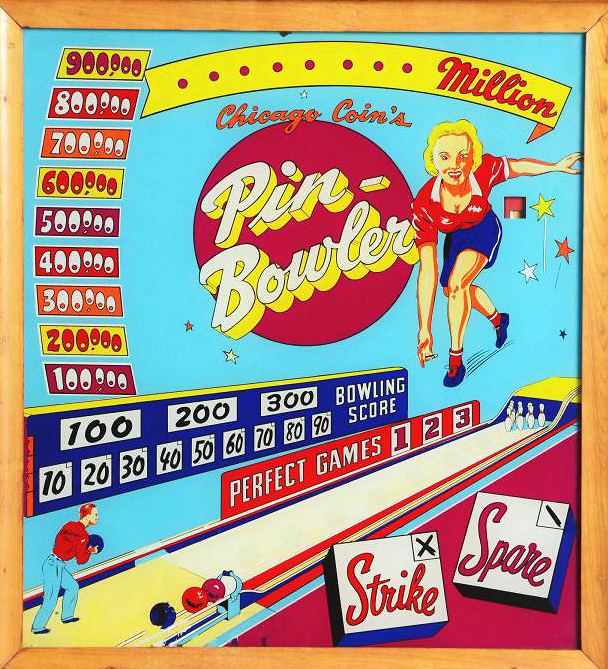
Pin-Bowler, released by Chicago Coin in 1950, captures the mid-century obsession with alley sports through the lens of classic electromechanical design. Featuring the distinct, rustic aesthetic of artist Roy Parker, this single-player title strips away the complex ramps and magnets of modern machines to focus on the pure, rhythmic tension of the bowling lane. It is a game that demands precision rather than power, challenging the player to navigate the playfield with the same focus required to spare a ten-pin frame.
The gameplay is straightforward yet deceptively difficult, utilizing a five-ball count that mimics the scarcity of a real bowling frame. Without the safety nets of modern multiballs or ball-save timers, every shot feels consequential. The light-based display system provides immediate, high-contrast feedback as you clear the pins, creating a satisfying visual loop that rewards consistent accuracy.
For those looking to master this vintage relic, the key lies in understanding the playfield’s geometry early on. Because the machine lacks the “extra life” mechanics of later eras, your strategy must prioritize controlled shots over raw velocity; treat the playfield as an extension of the lane, focusing on the center-track flow to maximize your scoring potential. Pin-Bowler remains an essential piece of arcade history, offering a direct, unadorned experience that highlights the foundational appeal of sports-themed gaming.