
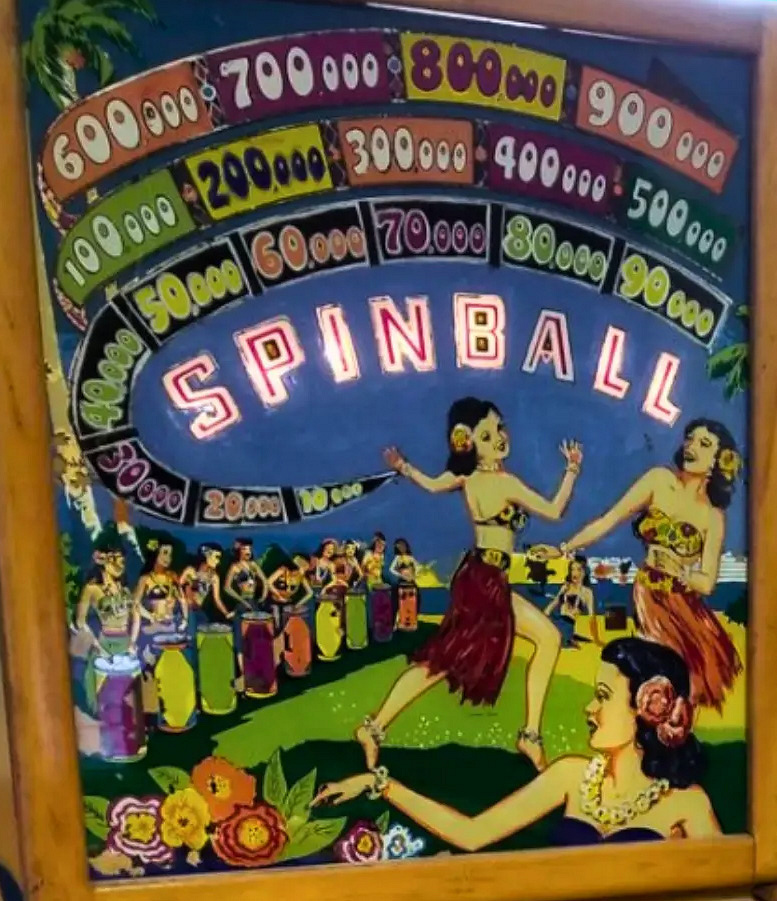
Spinball, released by Chicago Coin in 1968, serves as a nostalgic trip to a neon-soaked, mid-century island retreat. Designed by the prolific Jerry Koci, this single-player electromechanical machine captures the breezy, rhythmic spirit of a Hawaii-themed dance hall. Rather than relying on the complex ramps or digital displays of the modern era, Spinball leans heavily into the kinetic, chaotic joy of early pinball engineering, utilizing an expansive array of eleven passive bumpers that turn the playfield into a relentless obstacle course for the ball.
The machine’s namesake mechanic—a central spinning bumper—acts as the heart of the table, constantly redirecting play and demanding quick reflexes from the operator. With two flippers at the ready, the goal is to navigate the ball through the dense forest of bumpers and into one of the three strategically placed kick-out holes. Because the layout is devoid of the guided flow found in later designs, the gameplay experience is one of constant, unpredictable rebounds. It is an exercise in pure, high-stakes deflection that rewards players who can master the erratic physics of an era where every bounce felt like a gamble.