
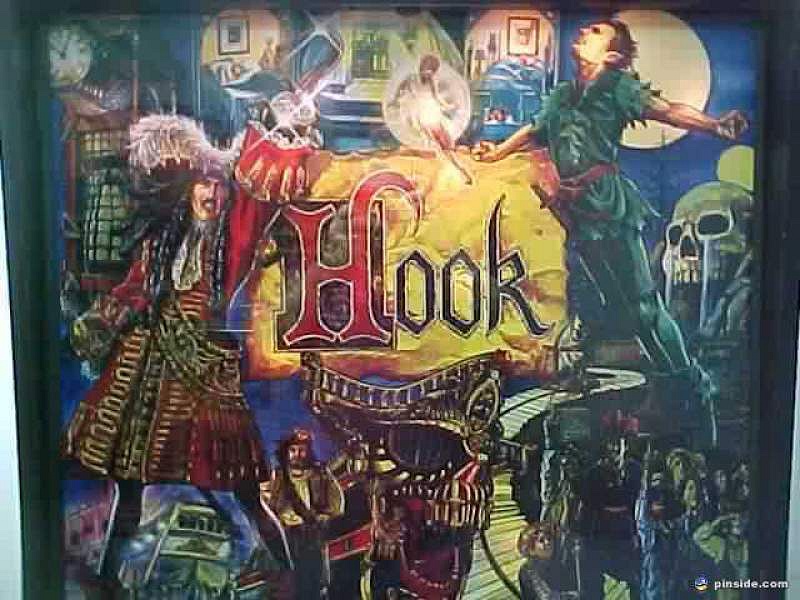
Avast, ye buccaneers — Data East’s 1992 Hook drops you into the grown-up Neverland of Steven Spielberg’s pirate fantasy, and designer Tim Seckel built a fast, friendly four-player romp around it. With Paul Faris art, a Brian Schmidt score, and a confirmed run of 6,705 machines, this is the kind of approachable early-DMD title that hooks newcomers and keeps tournament regulars honest. The layout is clean and classic: a pair of flippers, a trio of pops, a four-bank of drops, and a scoop that ties the whole adventure together.
The beauty of Hook is how rewarding its simplest line of play can be. If your flippers are healthy, the left ramp becomes a points printer — combo it relentlessly and the awards climb toward three million per shot, an old-school “keep it simple” strategy that wins games. The right ramp has its own treasure: hit it twice to launch the croc clock, where big points hide for a swashbuckler bold enough to chase them. For the bigger swings, complete the nine yellow standups to arm multiball, leaning on the top-left hole to spot the stragglers and to kick the festivities off, then alternate the ramps for jackpots.
Don’t sleep on the skill shot, either — it reappears throughout the game, so the wise pirate learns its timing in a practice session before it matters. Hook never tries to be the deepest game on the floor, and that’s precisely its charm. It’s bright, it’s quick, it’s built around a couple of satisfying ramp shots, and it captures that Lost Boys spirit of just running headlong into the fun. Bangarang.