
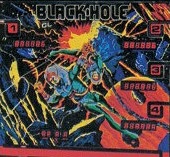
Black Hole, designed by Giuliano Lodola and released in 1980, stands as an atmospheric titan of the early solid-state era. Immersing players in a moody, space-fantasy void, the machine eschews the frantic pop-rock aesthetic of its contemporaries for a deep, celestial tension. Its design philosophy centers on high-stakes target management, forcing players to navigate dangerous clusters of drop targets and standups to build scoring momentum. The playfield feels like a labyrinthine drift through deep space, where every shot demands precision to avoid the crushing gravity of the outlanes.
The strategic core of the experience lies in balancing the risk of the target banks against the reward of the spinners. To maximize your scoring potential, you must systematically clear the red and yellow drop target groups alongside the green standups; completing these color-coded objectives illuminates the saucer for massive point payouts. Savvy players should aim to trigger the “Blackout” feature, which doubles these saucer values, though it comes at the cost of resetting your target progress. Managing the 1-2-3 rollover sequence is equally critical, as these multipliers persist across your game, providing the necessary leverage to climb the leaderboard.
Tournament-minded players should exercise caution with the scoring multipliers, as the 5x bonus does not carry over between balls. It is often wiser to maintain a 4x multiplier through the first two balls to ensure you aren’t starting your final drain with a reset scoring floor. While the targets are inherently treacherous, they remain the essential gatekeepers to the high-value spinners that define a winning run. Black Hole remains a masterpiece of rhythmic, high-tension gameplay that rewards patience and surgical accuracy over chaotic flailing.