
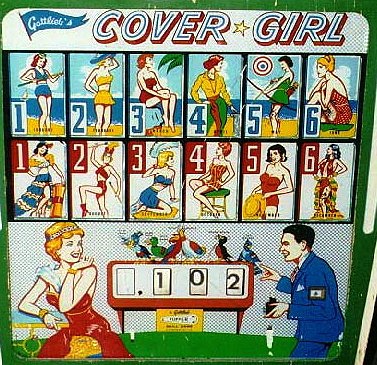
Gottlieb’s 1962 classic, *Cover Girl*, stands as a quintessential artifact of the early electro-mechanical era, showcasing the iconic synergy between designer Wayne Neyens and artist Roy Parker. With its glamorous theme focused on the world of fashion modeling, the machine captures the mid-century aesthetic that defined the golden age of pinball. Built for the single-player experience, the playfield is a masterclass in minimalist design, relying on raw mechanical feedback rather than digital complexity to challenge the player.
The layout is deceptively simple, anchored by a pair of flippers and a trio of pop bumpers that demand precise nudging and timing. A standout feature of the playfield is the inclusion of two gobble holes, which act as high-stakes traps that punish wayward shots while simultaneously serving as key scoring objectives. The integration of a split standup target alongside rollover buttons forces players to carefully navigate the center of the table, rewarding those who can maintain ball control amidst the unpredictable bounces inherent to the era’s hardware.
With a production run of 2,100 units, *Cover Girl* remains a prized piece for collectors who appreciate the tactile, rhythmic nature of EM machines. Success on this table requires a disciplined approach to shot selection; because the gobble holes are unforgiving, the most effective strategy involves prioritizing the rollover lanes to build your bonus multipliers before attempting to clear the split targets. It is a lean, stylish, and challenging machine that serves as a perfect reminder of why the Neyens-Parker partnership remains legendary in the annals of arcade history.