
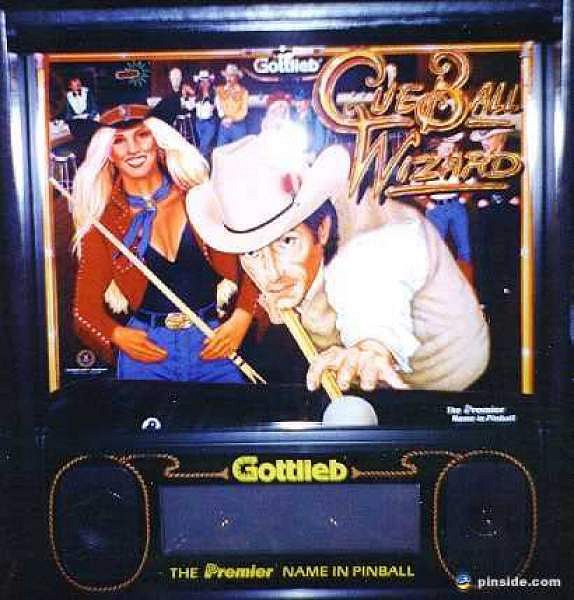
Cue Ball Wizard, released by Gottlieb in 1992, stands as a quintessential example of the 90s solid-state era, blending a high-energy billiards theme with a surprisingly deep, goal-oriented ruleset. Designed by Jon Norris, this table centers on the frantic pursuit of “Pool Ball Mania,” a multiball mode that turns the playfield into a scoring engine. With its vibrant, pool-hall aesthetics and a layout packed with 21 standup targets, two massive 7-bank drop target arrays, and three kick-out holes, the game demands precision shooting to navigate its complex web of rules and modes.
The gameplay loop is built around the right ramp, which serves as the primary gateway for starting modes, initiating multiball, and eventually chasing the massive 500-million-point 9-ball jackpot. While the game offers a variety of ways to play, veteran players often find that the most efficient path to a high score involves timing out specific, lower-scoring modes to progress toward the grand finale. Mastering the “Double” spell-out—which requires hitting the corner pocket saucer before hammering ramps—is essential for doubling your eventual jackpots, potentially pushing that 9-ball payout into the billion-point stratosphere.
Navigating the table requires a calculated approach to risk versus reward. While the bank shots into the top saucers can yield impressive 20-million-point awards, the unpredictable ball returns make them a dangerous gamble. Savvy players will prioritize building their end-of-ball bonus, which can be scaled up to 7x by completing racks; given that Pool Ball Mania scoring is heavily tied to these accumulated bonuses, this strategy often separates the casual rack-runners from the high-score wizards. Despite its occasional quirks, like the widely maligned video modes, Cue Ball Wizard remains a compelling, target-heavy challenge that rewards those who can manage the table’s chaotic, high-speed flow.