
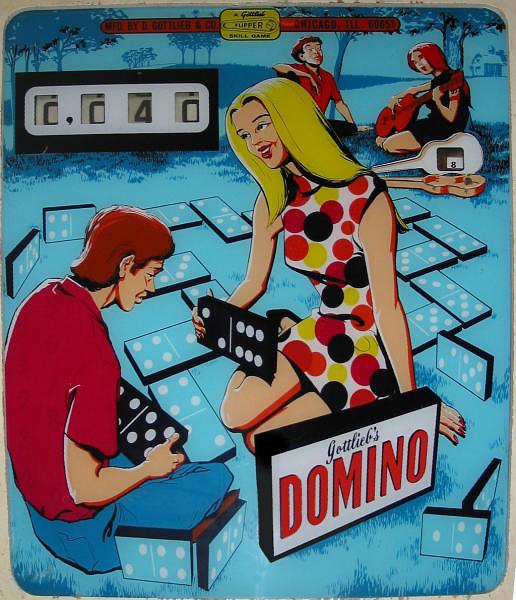
Domino, a 1968 release from Gottlieb, stands as a quintessential example of the late-sixties electro-mechanical era, showcasing the masterful synergy between designer Ed Krynski and artist Art Stenholm. Built on a theme of pure, uncomplicated joy, the machine leans into the classic “games” aesthetic, utilizing a vibrant, clean visual style that defined the golden age of the local bowling alley or corner tavern. With 2,650 units produced, it remains a sought-after piece for collectors who appreciate the tactile satisfaction of mechanical reel scoring and the rhythmic, hum-and-click atmosphere of a true EM classic.
The playfield layout is a masterclass in Krynski’s signature geometry, centered around the strategic use of two roto-targets that demand precision shooting to advance scores and trigger game objectives. Flanked by four pop bumpers and a pair of active slingshots, the game forces players to contend with a lively, unpredictable ball path. Seven standup targets and two strategically placed kick-out holes provide the primary scoring opportunities, challenging players to balance aggressive shots with the defensive necessity of keeping the ball away from the outlanes.
Mastering Domino requires a disciplined approach to the roto-targets, as consistent hits are essential to building the bonus structure necessary for high-score runs. Because the game lacks the complex ball-saving features of modern pins, the strategy here is purely old-school: focus on rhythmic, controlled trap-and-shoot patterns to navigate the bumpers safely. It is a game of patience and timing, rewarding those who can maintain a steady flow through the kick-out holes while navigating the chaotic bounce of the upper playfield. For the enthusiast, Domino offers a nostalgic, high-stakes test of fundamentals that perfectly captures the spirit of its time.