
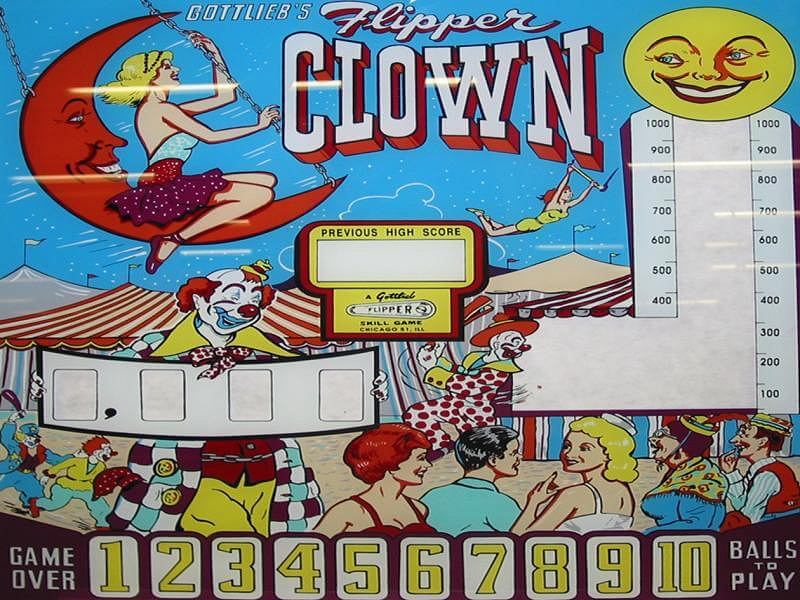
Flipper Clown, a 1962 release from Gottlieb, stands as a quintessential artifact of the early solid-state transition era, capturing the whimsical, high-contrast aesthetic of the circus midway. Designed by the legendary Wayne Neyens with the iconic, expressive artwork of Roy Parker, this single-player electromechanical machine eschews the complexity of modern rulesets for the pure, addictive loop of the “Add-a-Ball” specialty. With 1,550 units produced, it remains a sought-after piece for collectors who appreciate the tactile satisfaction of reel-based scoring and the frantic energy of a carnival-themed playfield.
The mechanical heart of Flipper Clown is defined by its symmetry and its reliance on classic arcade hazards. Players must navigate four pop bumpers and two slingshots that keep the ball in constant, unpredictable motion across the playfield. The standout features are the dual Roto-targets, which demand precision shooting and timing to rack up scores. Because this is an Add-a-Ball game, the primary objective is to maintain ball control and complete sequences to extend your session, turning a standard round into a high-stakes endurance test under the big top.
Mastering Flipper Clown requires a focus on the four rollover buttons, which, when combined with the Roto-targets, provide the most reliable path to extending your game. Since the machine lacks the safety nets of modern ball saves or deep mission modes, the strategy is entirely rhythmic; you must learn the specific rebound angles of the pop bumpers to keep the ball away from the outlanes. It is a masterclass in minimalist design, proving that even decades later, the simple joy of keeping a ball in play remains the most compelling trick in the circus.