
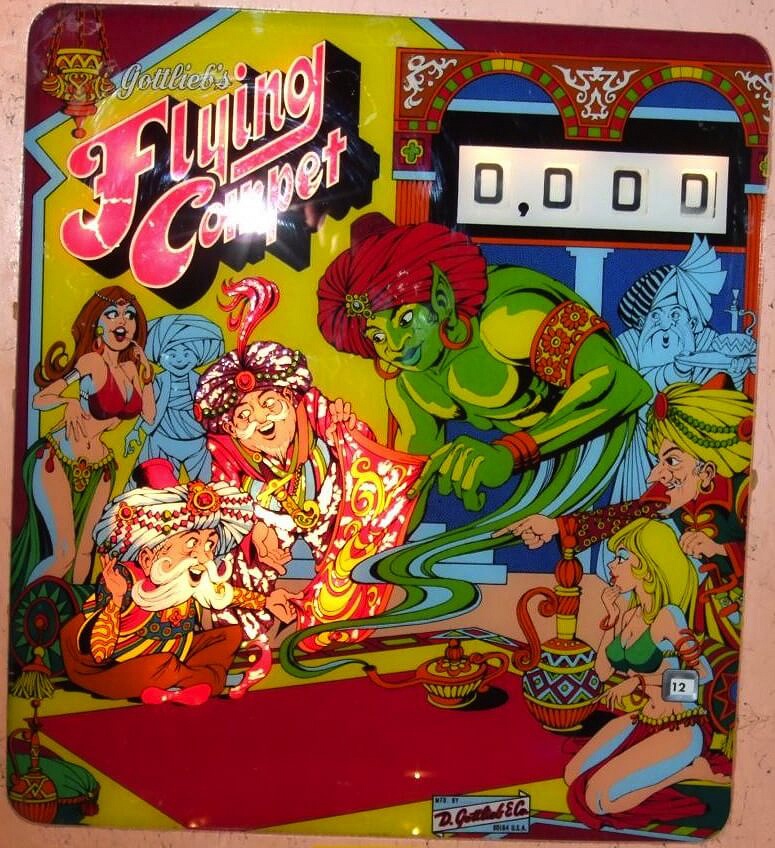
Flying Carpet, a 1972 classic from Gottlieb, remains a quintessential example of the golden era of electromechanical design. Penned by industry legend Ed Krynski and featuring the vibrant, whimsical aesthetics of Gordon Morison, this single-player machine leans heavily into the mystical allure of Arabian nights. The playfield is a dense, symmetrical landscape dominated by a dozen standup targets that demand precision; it is a game that eschews complex modern gimmicks in favor of pure, rhythm-based shot-making, challenging players to navigate the board with only two flippers and a pair of dual outlanes that are notoriously unforgiving.
The mechanical heart of the machine lies in its pop bumpers, which serve as the primary source of high-score potential if the player can demonstrate the discipline to unlock them. By completing the “P” and “A” targets, you effectively supercharge the bumpers, transforming them from simple obstacles into high-value point generators that reward consistent accuracy. With over 3,000 units produced, Flying Carpet stands as a testament to Krynski’s mastery of the EM layout, proving that even a straightforward fantasy-themed table can offer a deep, addictive challenge for those willing to master its target-heavy geometry.