
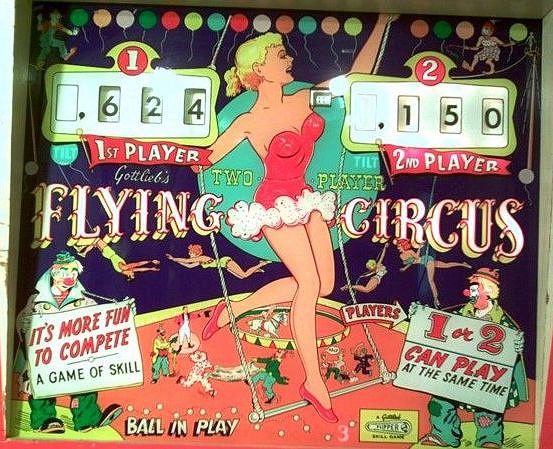
Gottlieb’s 1961 release *Flying Circus* is a spectacular mid-century showcase of electro-mechanical design, born from the legendary partnership of designer Wayne Neyens and artist Roy Parker. This two-player gem, which saw a confirmed production run of 2,050 units, perfectly captures the whimsical, high-flying energy of the big top. Parker’s vibrant, nostalgic artwork splashes across the backglass with classic carnival flair, while Neyens delivers a playfield layout that is both elegantly simple and deceptively challenging. At a time when pinball was transitioning into its golden era, this machine stood out as a testament to how physical mechanics could create immense tactical depth without a single line of digital code.
The heartbeat of the playfield is its unique mechanical layout, dominated by a striking array of five captive balls nestled in the upper playfield. Rather than aiming for traditional drop targets, players must use the game’s two flippers to rattle these captive channels, sending the trapped spheres upward to advance their score and light up high-value features. Surrounding this central kinetic puzzle are four highly active pop bumpers and two slingshots that keep the ball zipped around the playfield at a relentless pace. However, the defining feature of the table—and the ultimate risk-and-reward element—is the pair of classic gobble holes. These physical hazards will happily swallow your ball to award massive point surges or extra balls, but doing so immediately ends your turn, creating a constant psychological battle between safe flipper play and greedy, high-stakes plunges.
For tournament players and EM enthusiasts, strategy on *Flying Circus* revolves entirely around ball control and risk management. Because the gobble holes offer such lucrative scoring opportunities, the temptation to nudge or steer the ball into them is constant; however, doing so prematurely can cost you valuable momentum if your opponent is slowly building a massive score on the reels through safer pop bumper play. Precision shots to the captive ball lanes are the safest route to victory, requiring players to master the rebound angles off the lower slingshots. Decades after its release, *Flying Circus* remains a highly prized relic of the woodrail transition era, offering a masterclass in tension, physics, and pure arcade joy.