
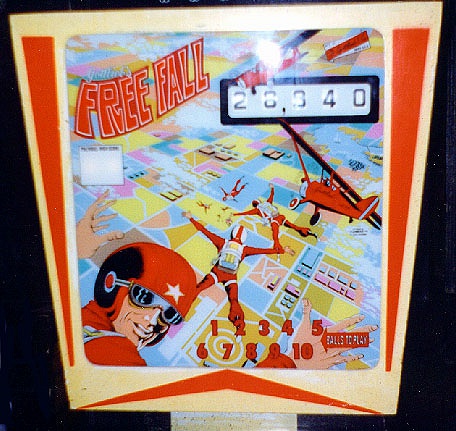
Free Fall, released by Gottlieb in 1981, stands as a quintessential example of Ed Krynski’s late-era electromechanical mastery. With artwork by the legendary Gordon Morison, the machine captures the high-stakes adrenaline of skydiving, translating the tension of a terminal-velocity descent into a focused, single-player experience. The playfield is defined by its robust 7-bank drop target array, a centerpiece that demands precision and punishes wild, frantic shots. Unlike the high-speed, multi-ball heavy machines of the modern era, Free Fall relies on the satisfying, tactile feedback of its mechanical reels and the rhythmic “clack” of its drop targets, embodying the pure, unadulterated spirit of classic Add-A-Ball gaming.
The mechanical layout is deceptively simple, featuring three pop bumpers and two slingshots that keep the ball in constant, unpredictable motion across the playfield’s six standup targets. To master the game, players must focus on the numbered rollovers, which systematically illuminate the corresponding drop targets to build a multiplier. A savvy strategy involves using the center pop bumper to shift the 10x multiplier toward a target that is already lit; successfully stacking this multiplier with a drop target shot is the key to cracking the 5,000-point threshold.
With only 650 units produced, Free Fall remains a rare, sought-after gem for collectors who appreciate the design philosophies of the late EM transition period. It eschews the digital flash of later decades in favor of a straightforward, skill-based progression. Whether you are hunting for the elusive 10x bonus or managing your ball count through the Add-A-Ball feature, this machine demands a disciplined approach, rewarding players who can maintain composure while the clock—and the gravity—works against them.