
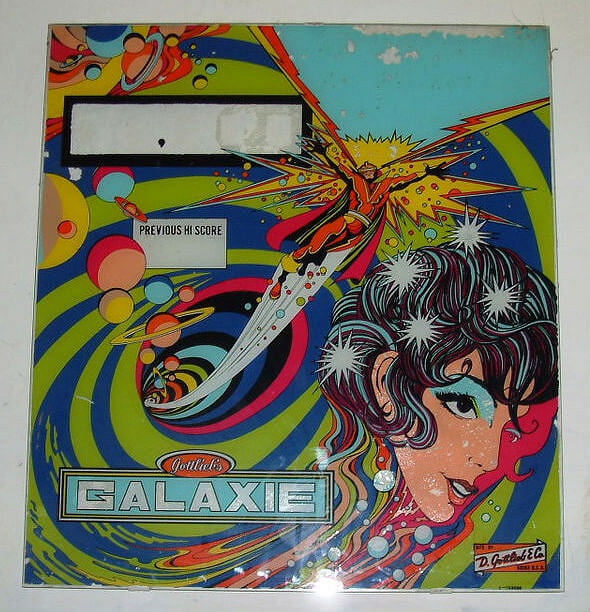
Galaxie, a 1971 release from Gottlieb, stands as a quintessential example of Ed Krynski’s design mastery during the golden age of electromechanical machines. Featuring iconic artwork by Gordon Morison, this single-player “Add-a-Ball” title eschews the traditional replay-based scoring of its contemporaries in favor of extended play time, rewarding accuracy with extra balls rather than free games. The board is defined by two imposing banks of ten drop targets each, creating a high-stakes environment where the primary objective is to clear the board and keep the action alive in the upper playfield.
Gameplay on Galaxie is a exercise in calculated risk management. With five kick-out holes scattered across the table, the machine encourages a patient, tactical approach. A key strategy for any serious player is to focus on clearing the various colored target sets, which in turn illuminates the corresponding bottom lanes and saucers to maximize scoring potential. Conversely, seasoned veterans often suggest exercising extreme caution around the lower center targets; they are notoriously hazardous, offering a poor return on investment compared to the safer, more lucrative shots found elsewhere on the playfield.
For those looking to start their game with momentum, the skill shot is paramount. A precise plunge into the center saucer—or any of the other lit kick-out holes—awards a significant 3,000 points, providing a vital cushion before the ball descends into the chaos of the lower playfield. With only 1,279 units ever produced, Galaxie remains a sought-after piece of history, demanding a steady hand and a disciplined eye to conquer its unforgiving drop-target arrays.