
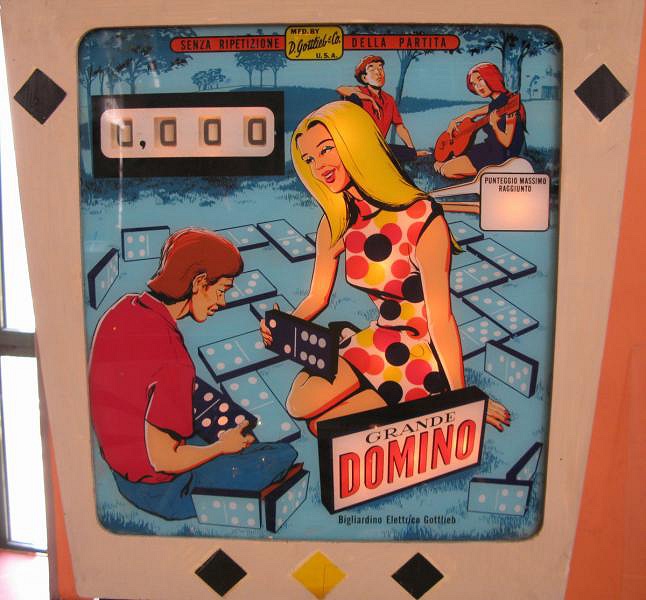
Grande Domino, released by Gottlieb in 1968, stands as a quintessential example of Ed Krynski’s design mastery during the golden age of electromechanical machines. With vibrant, classic art by Art Stenholm, the table translates the strategic nature of the tile game into a frantic, high-scoring pinball experience. Unlike the replay-heavy machines of its era, this single-player title centers on the “add-a-ball” mechanic, turning every successful sequence into an opportunity to extend your session rather than simply chasing a free game.
The mechanical layout is deceptively simple but demands precision, utilizing a pair of roto-targets that shift the goalposts as you advance. Krynski fills the playfield with a busy arrangement of four pop bumpers and seven standup targets, forcing players to navigate tight lanes while keeping their eyes on the two kick-out holes. Because the machine rewards sustained play through its add-a-ball feature, the tempo feels relentless; you aren’t just playing for points, but for survival.
Success on Grande Domino requires a disciplined approach to the roto-targets, as they act as the primary engines for cycling through the game’s scoring tiers. Because there are no digital displays or deep rulesets to rely on, you have to read the playfield’s mechanical state constantly. It is an honest, tactile challenge that requires steady flipper control to keep the ball in play, making it a prized specimen for collectors who value the pure, unadulterated tension of mid-century Gottlieb engineering.