
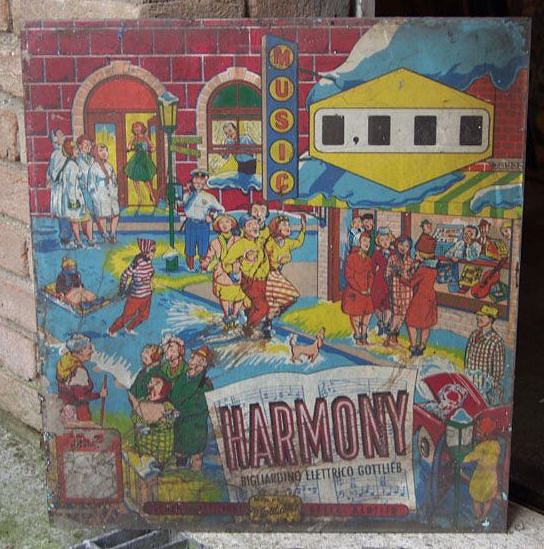
Harmony, a 1968 classic from Gottlieb, stands as a quintessential example of Ed Krynski’s design mastery during the golden age of electromechanical machines. With art by the legendary Art Stenholm, the game embraces a whimsical, lighthearted theme of happiness and song. Unlike the high-octane scoring frenzies of later decades, Harmony relies on the charm of its “Add-a-ball” mechanic, a staple of the era designed to keep the player engaged through extended play sessions rather than simple credit-chasing. Its layout is deceptively simple, featuring two flippers, four pop bumpers, and a series of four relay kick-out holes that serve as the primary focus of the playfield.
The gameplay revolves around a strategic pursuit of the four saucers. Because these kick-out holes eject the ball in a specific left-to-right sequence, the most savvy players focus on illuminating the lights on the far right first to maximize their scoring potential. Achieving a full set of lit numbers in a single color rewards the player with an extra ball, a satisfying loop that rewards precision over raw power. The playfield geometry is tight, and given the proximity between the flippers and the prominent center post, veterans often recommend a “dead pass” or simply letting the ball strike the post rather than risking a mistimed flip that could send the ball draining down the middle.
With only 2,000 units produced, Harmony remains a sought-after piece for collectors who appreciate the tactile feedback of reel-based scoring and the deliberate, rhythmic pace of late-sixties Gottlieb design. It doesn’t rely on complex toys or flashing LEDs; instead, it demands patience and a rhythmic approach to the shot sequence. For those looking to master this vintage gem, the goal is clear: manage your color-coded lights, respect the center post, and keep the ball in play to achieve the perfect, harmonious score.