
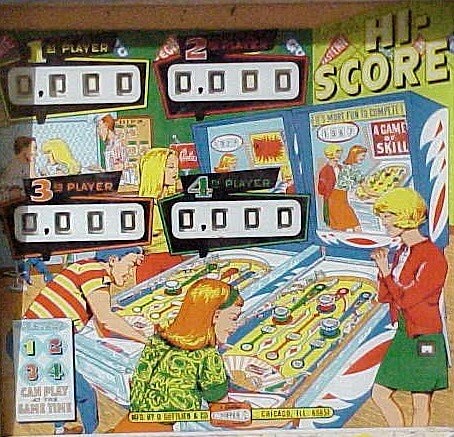
Hi-Score, released by Gottlieb in 1967, stands as a quintessential artifact of the Electromechanical era, designed by the legendary Ed Krynski with characteristically vibrant artwork by Art Stenholm. This four-player machine leans into a meta-theme, celebrating the very spirit of competitive pinball itself. With a classic reel-based display and a production run of 1,900 units, it captures the tactile, rhythmic joy that defined the late-sixties arcade experience, long before digital scores and complex rulesets dominated the scene.
The mechanical layout is a masterclass in space utilization, featuring four flippers that demand precise timing to navigate a playfield dense with action. The board is anchored by four pop bumpers and a passive bumper, creating a chaotic, unpredictable environment for the ball. Players must master the captive ball spinner and navigate the two kick-out holes to rack up the titular high score. The inclusion of a rollunder adds a layer of depth to the geometry, forcing players to account for ball trajectory in ways that simpler designs of the era often ignored.
For those looking to dominate this classic, the key lies in controlling the flow through the kick-out holes while maintaining ball containment via the lower flipper pair. Since the game rewards steady, repetitive point-building rather than complex mission completion, precision shooting at the standup targets is paramount to boosting the bonus multiplier. Whether configured for three or five-ball play, Hi-Score remains a pure, unfiltered test of reflexes and ball control, serving as a reminder of why Gottlieb’s mid-century designs remain the gold standard for EM enthusiasts.