
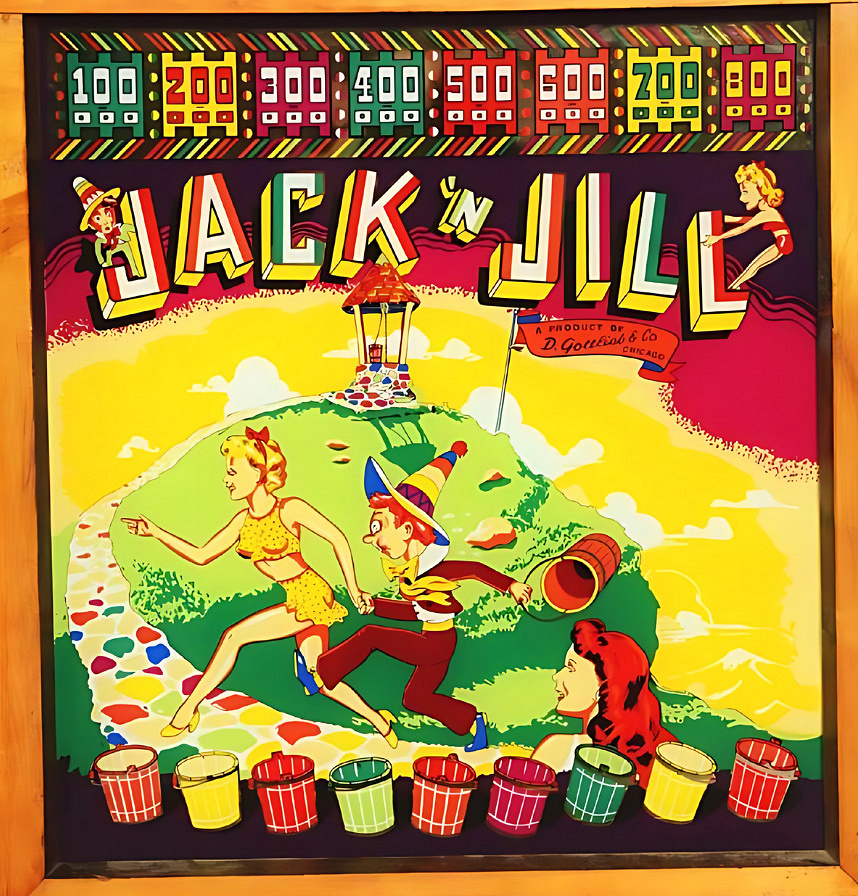
Jack ‘N Jill, released by Gottlieb in 1948, stands as a quintessential relic of the early electro-mechanical era, showcasing the foundational design sensibilities of Harry Mabs and the whimsical aesthetic of artist Roy Parker. Built around the classic nursery rhyme theme, this single-player machine eschews the complex modern rulesets of today in favor of pure, tactile arcade satisfaction. With a staggering nine pop bumpers and a trio of kick-out holes scattered across the playfield, the game serves as a chaotic, high-energy test of reflexes that feels surprisingly frantic given its age.
The playfield layout is defined by its unusual six-flipper configuration, a generous allotment that was aimed at keeping the ball in play amidst the dense thicket of bumpers. The art package, brought to life by Parker’s signature style, perfectly captures the playful, storybook charm of the era, providing a stark visual contrast to the aggressive, pinball-launching action happening beneath the glass. With only 2,000 units produced, it remains a rare, charming centerpiece for collectors who appreciate the transition period between the pre-flipper woodrails and the standardized machines that would follow in the 1950s.
For those looking to master this vintage experience, the primary strategy revolves around managing the ball’s unpredictable trajectory through the bumper field. Because the nine bumpers are so densely packed, players must learn to nudge the cabinet effectively to influence the ball’s exit path toward the kick-out holes, which act as the primary scoring engines. It is an exercise in “pinball geometry” rather than mission-based play; success here is measured by the ability to keep the ball from rattling out of control, turning a simple nursery rhyme premise into a surprisingly challenging game of survival.