
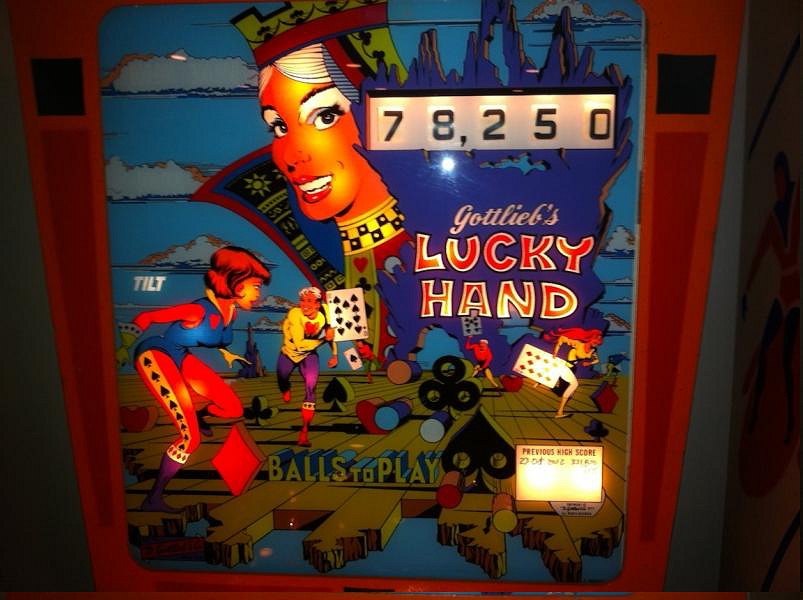
Lucky Hand, released by Gottlieb in 1962, stands as a quintessential example of Ed Krynski’s design mastery during the golden age of electromechanical pinball. Featuring iconic, high-contrast card-themed artwork by Gordon Morison, this single-player machine strips away the modern clutter of ramps and magnets, focusing instead on the rhythmic satisfaction of precision shooting. At the heart of the playfield lies a robust nine-bank drop target array equipped with a trip-arm reset, demanding consistent accuracy from the player to clear the board and rack up high scores.
The gameplay is defined by its “Add-A-Ball” specialty, a classic Gottlieb hallmark that rewards sustained performance with extra play time rather than simple free games. To master the table, players must carefully navigate the upper rollovers, which act as strategic multipliers for the drop targets. A seasoned player knows to keep exactly three of these rollovers lit; triggering the fourth resets the multiplier entirely, effectively silencing your scoring potential. The optimal path to rolling the score involves a disciplined progression—methodically clearing Jacks, then Queens, then Kings to reset the targets and keep the cycle of points flowing.
With only 626 units produced, Lucky Hand remains a rare treat for collectors and enthusiasts of vintage EM machines. It is a game of patience and tactical target management, where the simplicity of the layout belies the intense focus required to maintain your multipliers. By balancing the risk of the rollovers against the rewarding feedback of the nine-bank target bank, players can experience the pure, unadulterated satisfaction that only a Krynski-designed classic can provide.