
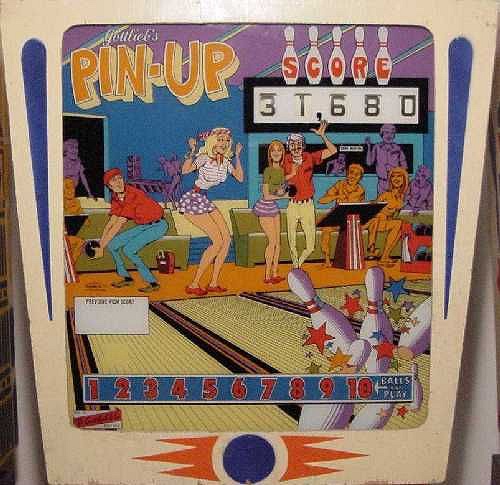
Pin-Up, released by Gottlieb in 1964, stands as a quintessential example of Ed Krynski’s design mastery during the golden age of electromechanical machines. Eschewing the complex narratives of modern pins, this single-player title leans into a classic bowling theme, utilizing Gordon Morison’s iconic art package to capture the playful, mid-century aesthetic of the era. With a production run limited to just 715 units, it remains a coveted piece of history for collectors who appreciate the tactile satisfaction of a pure, add-a-ball experience.
The mechanical layout is deceptively simple yet demanding, centered around a formidable bank of ten drop targets that recreate the tension of clearing a bowling frame. Krynski’s design utilizes a quartet of flippers to navigate the playfield, forcing players to carefully manage ball control to clear targets while utilizing two strategically placed kick-out holes. The inclusion of two pop bumpers adds a necessary layer of chaotic energy, often sending the ball ricocheting unpredictably back toward the drop targets, rewarding players who can maintain composure amidst the mechanical clatter.
Strategy on Pin-Up revolves entirely around the add-a-ball mechanic, which keeps the game alive through precision shooting rather than high-score accumulation. Because the machine lacks the digital complexity of contemporary titles, success requires a rhythmic approach to the drop targets; failing to clear the bank efficiently can quickly lead to a drain. It is a game of endurance and repetition, where the joy is found in the physical feedback of the relays and the satisfying snap of the targets as you chase the elusive perfect game.