
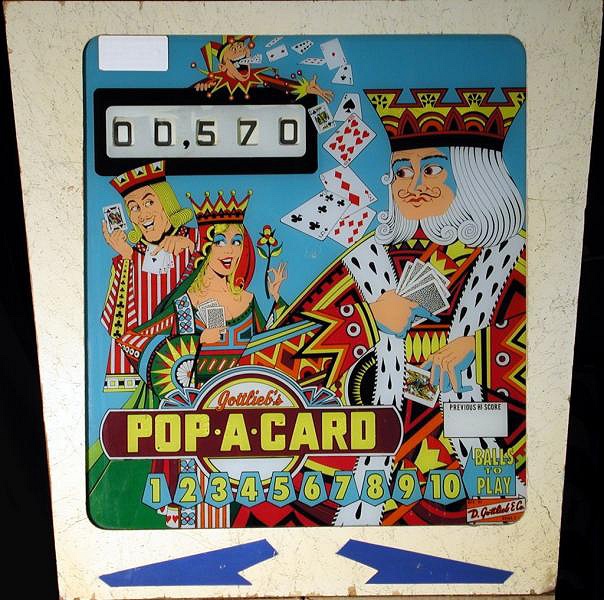
Pop-A-Card, released by Gottlieb in 1971, stands as a quintessential example of Ed Krynski’s design mastery during the golden age of electromechanical machines. With vibrant card-themed artwork by Gordon Morison, this single-player title strips away the clutter of modern features to focus on the pure, rhythmic satisfaction of drop-target precision. It is a game defined by its simplicity and its “Add-A-Ball” mechanic, a staple of the era that rewards skilled play with extended sessions rather than free games, keeping the tension high as you chase down the deck.
The playfield layout is a masterclass in tactical geometry, anchored by a total of thirteen drop targets spread across four and five-bank arrays. The objective is clear: systematically clear the targets to light the high-value lanes. Once the field is cleared, the strategy shifts toward “Up-The-Middle” (UTAD) play, where the goal is to navigate the ball into the 500-point lanes tucked into the upper sides of the playfield. The two pop bumpers and dual slingshots provide just enough chaotic energy to challenge your aim, requiring precise flipper control to keep the ball from draining before you can complete your set.
With only 825 units produced, Pop-A-Card has become a cherished relic for collectors who appreciate the tactile feedback of mechanical reels and the relentless pace of a well-tuned EM. It eschews complex modes for a focused, high-stakes experience that demands total concentration on the targets. Whether you are a fan of classic Gottlieb architecture or simply enjoy the challenge of a “one more ball” pursuit, this machine serves as a perfect reminder that sometimes the most compelling pinball is found in the elegance of a well-placed shot.