
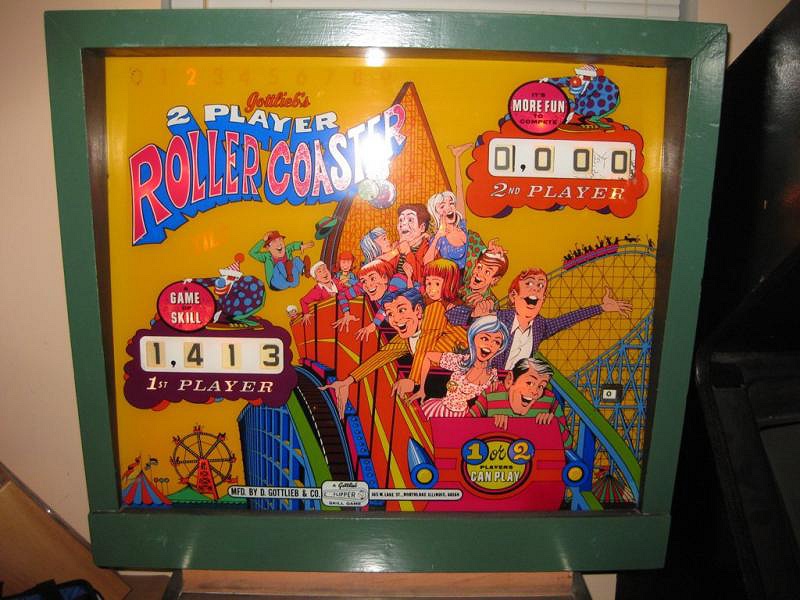
Roller Coaster, released by Gottlieb in 1971, stands as a quintessential example of the late-era electro-mechanical charm cultivated by designer Ed Krynski. With art by the iconic Gordon Morison, this two-player machine captures the whimsy of a midway attraction in a format that feels both nostalgic and deceptively simple. Despite its modest footprint, the playfield is anchored by a trio of pop bumpers and a pair of strategically placed kick-out holes, demanding precision rather than the chaotic, multi-ball-heavy play that defines the modern era.
In the world of EM machines, success is often found in mastering the geometry of the return lanes and the rhythm of the rebound. On Roller Coaster, the kick-out holes serve as the primary strategic focal points; players must focus on accuracy to trap the ball in these features to maximize point accumulation before the gravity of the playfield inevitably pulls the ball toward the drain. The mechanical relay-driven scoring on the reels provides a tactile satisfaction that digital displays simply cannot replicate.
With only 1,550 units produced, this machine remains a prized piece of history for collectors who appreciate the purity of Krynski’s layouts. It is a game that eschews complex modes and subways for the raw, kinetic energy of a well-timed shot. For the serious player, the challenge lies in the “less is more” philosophy—learning the specific rebound angles of the bumpers and the timing of the flippers to keep the game alive, mirroring the thrill of the very amusement park ride that inspired its creation.