
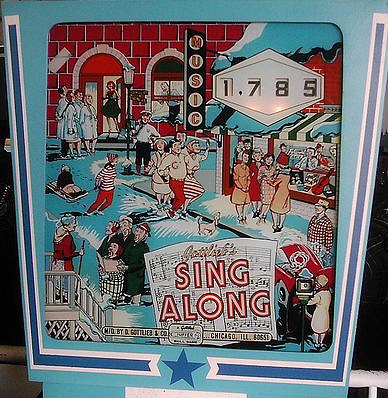
Sing Along, a 1967 classic from Gottlieb, stands as a quintessential example of the late-sixties electro-mechanical era, masterfully crafted by the legendary design duo of Ed Krynski and artist Art Stenholm. Eschewing the complex mechanical toys of the modern age, this machine relies on the rhythmic, tactile satisfaction of four relay kick-out holes and a vibrant, music-themed playfield. With its classic two-flipper configuration and a generous center post, the game demands a disciplined approach to ball control rather than brute-force shooting, rewarding the player who understands the geometry of the table over the one who simply mashes the buttons.
The core gameplay loop revolves around precision placement within the four saucers. Because these kick-out holes function in a sequence—ejecting the ball from left to right—the most effective strategy is to prioritize lighting the targets furthest to the right first. Completing the sequence by lighting all four numbers in a matching color is the primary goal, triggering an extra ball that can extend your session significantly. Regardless of which hole you land in, you are guaranteed the green pit point values, providing a consistent baseline for scoring, but the real mastery lies in manipulating the playfield lights to maximize your bonus potential.
Given the tight proximity between the flippers and the prominent center post, seasoned players know that “dead flipping” or simply letting the ball strike the post is often safer than an aggressive swing when the ball is centered. The game’s design is a lesson in patience and calculated risk; it is a machine that asks you to sing along with its mechanical tempo rather than fight it. With 3,300 units produced, Sing Along remains a beloved staple for collectors who appreciate the elegant, unadorned charm of a well-tuned Gottlieb EM.