
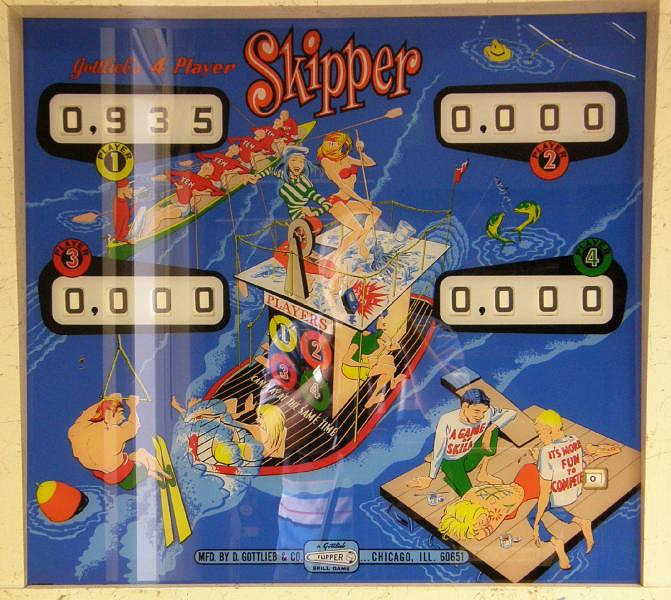
Skipper, a 1969 release from Gottlieb, serves as a quintessential example of the classic electro-mechanical era, capturing the breezy, sun-drenched aesthetic of mid-century water sports. Designed by the prolific Ed Krynski and featuring the vibrant, illustrative style of Art Stenholm, this four-player machine strips away modern complexity in favor of the rhythmic, satisfying gameplay that defined the golden age of arcade halls. With a production run of just under 1,700 units, it remains a sought-after piece for collectors who appreciate the tactile feedback of reel-based scoring and the straightforward, mechanical charm of the late sixties.
The playfield is defined by its clever use of physical feedback, most notably the dual hold-over vari-targets that challenge players to dial in their accuracy for maximum point accumulation. Unlike static targets, these require a deliberate, controlled strike to achieve full potential, forcing a more nuanced approach to ball control. The action is further punctuated by three pop bumpers and a signature rotating arrow bumper, which adds an unpredictable, shifting dynamic to the ball’s trajectory. Two strategically placed kick-out holes serve as both scoring objectives and potential hazards, rewarding the precision shooter while punishing those who lose focus during the frantic pace of a high-scoring round.
For those looking to master Skipper, the key lies in managing the vari-targets to keep the bonus multipliers climbing before aiming for the kick-out holes. Because the rotating arrow bumper constantly changes its orientation, players must learn to read the playfield flow rather than relying on muscle memory alone. It is a game of patience and timing, rewarding the player who can harness the erratic bounces of the bumpers while methodically working the targets. Skipper is a masterclass in minimalist design, proving that you don’t need deep software rules to create an engaging, competitive experience that stands the test of time.