
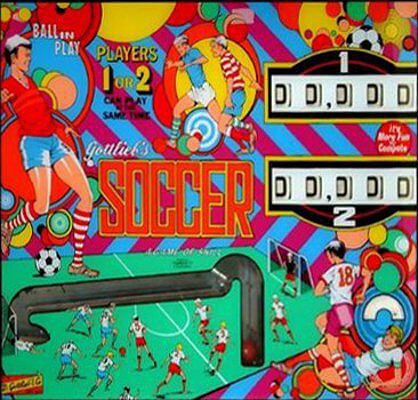
Gottlieb’s 1964 release, Soccer, stands as a quintessential example of the mid-sixties electromechanical era, capturing the kinetic energy of the pitch through the legendary design partnership of Ed Krynski and artist Gordon Morison. As a two-player machine produced during the golden age of Gottlieb’s reliability, it trades the complex rule sets of modern digital tables for the satisfying, tactile rhythm of a classic EM. The playfield is deceptively straightforward, featuring a pair of flippers, three pop bumpers, and two spinning targets that mimic the frantic pace of a match, while the right outlane ball return gate offers a rare, merciful reprieve for players fighting to keep their ball in play.
The true showstopper of this cabinet is the mechanical backbox animation, a signature Gottlieb flourish that adds a sense of occasion to every goal scored. Rather than relying on a screen, the game uses physical movement to track your progress as you navigate the standup targets and kick-out holes. Because the table lacks the “save” features of modern pins, mastery here is entirely dependent on timing your shots to the spinning targets and learning the specific rebound angles off the pop bumpers. It is a masterclass in minimalist design, proving that you don’t need a deep code stack to experience the high-stakes tension of a championship game.