
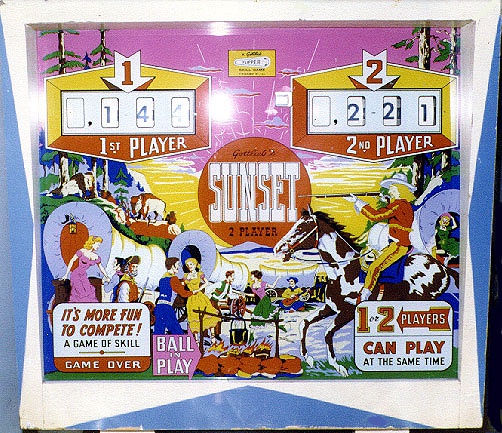
Sunset, a 1962 release from Gottlieb, serves as a quintessential masterclass in mid-century electromechanical design. Penned by the legendary Wayne Neyens with the unmistakable, vibrant aesthetic of artist Roy Parker, this two-player machine transports players to the American West with a focus on simplicity and tactile satisfaction. Unlike the frantic, screen-heavy experiences of the modern era, Sunset relies on a disciplined layout featuring four pop bumpers and two passive bumpers, forcing players to master the geometry of the playfield to navigate the captive ball mechanisms that act as the game’s primary scoring engine.
The mechanical charm of Sunset lies in its deliberate pace and the challenge of its dual-lane architecture. With its dual outlanes flanking both sides, the game demands precise flipper control to avoid premature drains while hunting for the standup targets. The inclusion of five captive balls creates a unique, rhythmic interplay between the player and the machine; clearing these targets requires a steady hand and a keen eye for ball trajectory. By stripping away the digital complexity of contemporary titles, Neyens created a focused, high-stakes environment where every flick of the flipper feels consequential.
For those looking to conquer this vintage classic, the key is to prioritize target accuracy over raw speed. Because the scoring is anchored to the interaction with the captive ball cluster and the strategic use of the pop bumpers, reckless play will quickly lead to the outlanes. Mastering the subtle nudge to keep the ball away from those treacherous side drains is essential for climbing the reels. Sunset stands as a testament to an era when pinball was about the raw, physical connection between the player, the ball, and the steel, making it a prized acquisition for any collector who values the pure, stripped-down spirit of the West.