
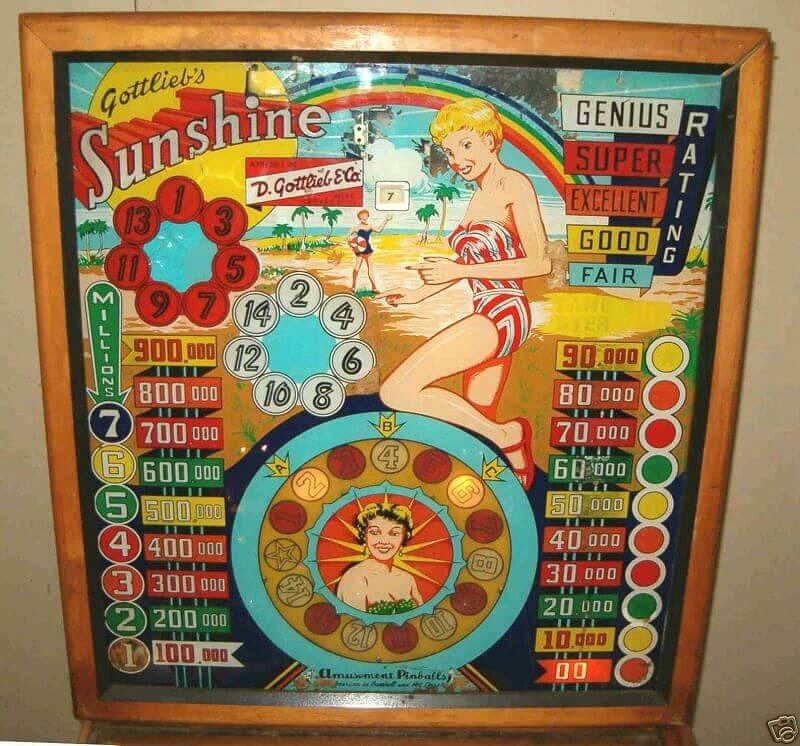
Sunshine, a 1958 classic from Gottlieb, serves as a quintessential masterclass in mid-century electromechanical design. Penned by the legendary Wayne Neyens with the iconic, whimsical art style of Roy Parker, this single-player machine captures the simple, high-stakes charm of the late fifties. While modern tables rely on complex digital displays, Sunshine commands attention through its vibrant backglass and a mechanical backbox animation that pulses with the spirit of the era. It is a compact, focused experience, utilizing a classic two-flipper layout that demands precision rather than brute force.
The playfield is deceptively straightforward, dominated by a cluster of five pop bumpers that act as a chaotic engine for ball movement. The true challenge, however, lies in the trio of “gobble holes” scattered across the board. These features turn the game into a high-tension pursuit of placement; unlike modern scoops that return the ball, these holes represent the ultimate conclusion to your turn. Mastering the geometry of the playfield is essential, as the bumper layout often sends the ball careening toward these hungry voids with little warning.
With only 1,100 units ever produced, Sunshine remains a prized specimen for collectors who appreciate the tactile, rhythmic clatter of an EM machine. It eschews the multi-ball frenzy of contemporary pinball for a meditative, singular focus on ball control and target navigation. For the serious archivist, the game stands as a testament to Neyens’ ability to create deep engagement from minimal geometry, proving that you don’t need a complex ruleset to capture the pure, sun-drenched joy of a well-played game.