
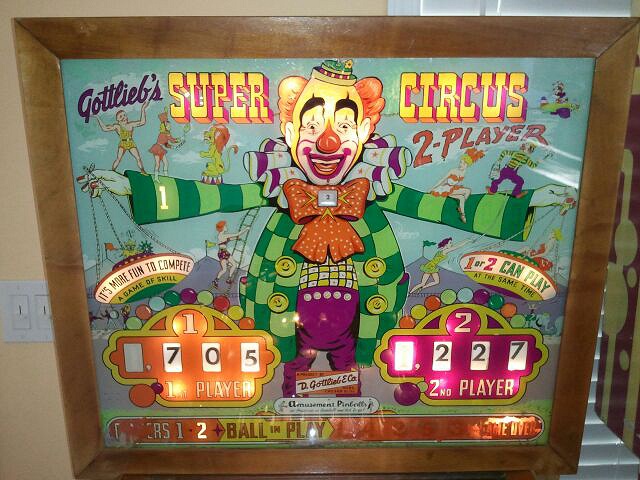
Super Circus, the 1957 classic from Gottlieb, serves as a masterclass in mid-century electromechanical design, pairing the legendary creative duo of designer Wayne Neyens and artist Roy Parker. As a two-player machine, it captures the jubilant, chaotic energy of a big-top performance through its vibrant cabinet art and focused mechanical layout. The playfield is anchored by five pop bumpers that provide a frantic, unpredictable bounce, demanding a steady hand from players accustomed to the more deliberate pacing of the era.
The machine’s defining centerpiece is the Roto-target, a rotating mechanical unit that forces players to recalibrate their aim as the panels spin, turning simple target practice into a rhythmic challenge. Complementing this are the dual gobble holes—a classic hallmark of the period—which reward precision shots with high-stakes scoring potential. While the game lacks the complex ramps of modern machines, the interaction between the two flippers and the strategically placed slingshots creates a tight, high-tension loop that remains quintessentially Gottlieb.
With only 1,500 units produced, Super Circus is a coveted piece of history that emphasizes the “happiness” theme of the golden age of pins. Success on this table requires mastering the geometry of the Roto-target; rather than just firing wildly, advanced players should focus on nudging the machine to influence ball trajectory toward the gobble holes while the target is static. It is a stripped-back, elegant experience that proves you don’t need a complex ruleset to capture the thrill of the ringmaster’s tent.