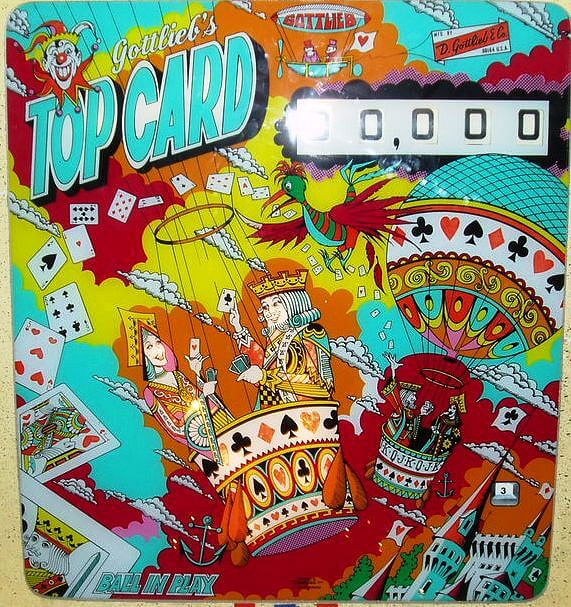
Top Card, released by Gottlieb in 1974, stands as a quintessential example of the mid-70s electro-mechanical era, blending the high-stakes aesthetic of a casino floor with the tactile satisfaction of a classic wedgehead-style layout. Designed by Jeff Brenner with striking, colorful backglass art by the legendary Gordon Morison, the machine leans heavily into its gambling theme, challenging players to navigate a dense field of thirteen standup targets. With a production run of 3,100 units, this single-player gem captures the era’s focus on precision shooting and rhythmic, mechanical feedback rather than the complex, multi-ball spectacle of modern machines.
The playfield is anchored by a traditional setup of two flippers, four slingshots, and three pop bumpers, all working in concert to keep the ball dancing across the star rollovers that dot the mid-field. The primary challenge involves tactical target management; the thirteen standups invite players to “build a hand” or clear the board, requiring a steady hand to avoid the frustrating drains common to the narrower, faster-paced layouts of the time. Because the game relies entirely on score reels and electromechanical relays, every shot feels weighted and deliberate, rewarding players who can master the momentum of the ball as it caroms off the bumpers.
For those looking to dominate this Gottlieb classic, the key is to prioritize the star rollovers to maximize your bonus multiplier before turning your attention to the standup bank. Unlike later electronic games that offer deep mode-based strategies, Top Card is a pure test of accuracy and flipper control. It is a machine that demands you treat every ball as a high-stakes gamble, forcing you to pick your targets carefully rather than relying on spray-and-pray tactics. For collectors and purists, Top Card remains a vibrant, challenging, and aesthetically iconic slice of pinball history.