
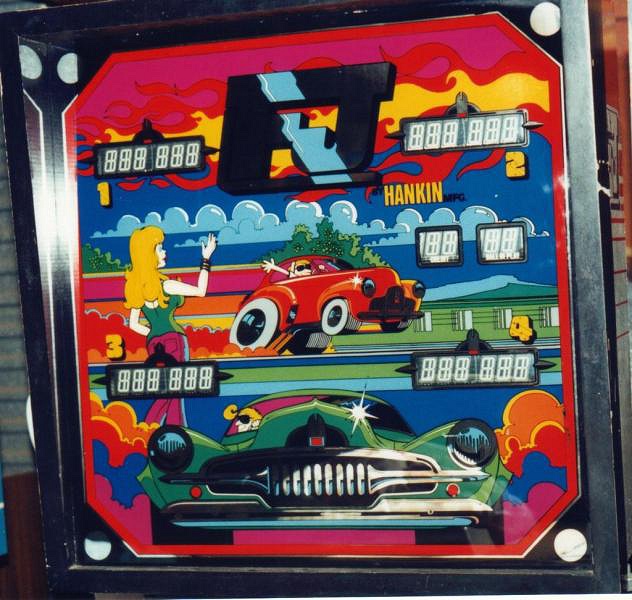
FJ, produced by the Australian manufacturer Hankin, stands as a quintessential relic of the late 1970s solid-state era. Embracing a high-octane hot rod and automotive nostalgia theme, the machine captures the spirit of a bygone era of custom car culture. While it maintains a relatively modest footprint with a traditional two-flipper layout, its playfield design relies on the rhythmic, mechanical satisfaction of classic target-heavy geometry. With art direction by Mike Eggleston, the cabinet and playfield visuals lean into the bold, stylized aesthetic that defined the transition from electromechanical to digital scoring.
The mechanical gameplay is anchored by three distinct kick-out holes, which serve as the primary strategic focal points for ball control and scoring bursts. Rather than relying on modern, complex toys, the table utilizes a pair of rollunder spinners—a staple of the era—to drive up point totals through high-velocity shots. Three pop bumpers occupy the upper playfield, providing the chaotic, unpredictable action characteristic of the period’s design philosophy. For the player, success on the FJ requires mastering the timing of these kick-out holes; treating them as reliable targets rather than just traps is essential for keeping the ball in play and stacking up a competitive score on the four-player alphanumeric display.