
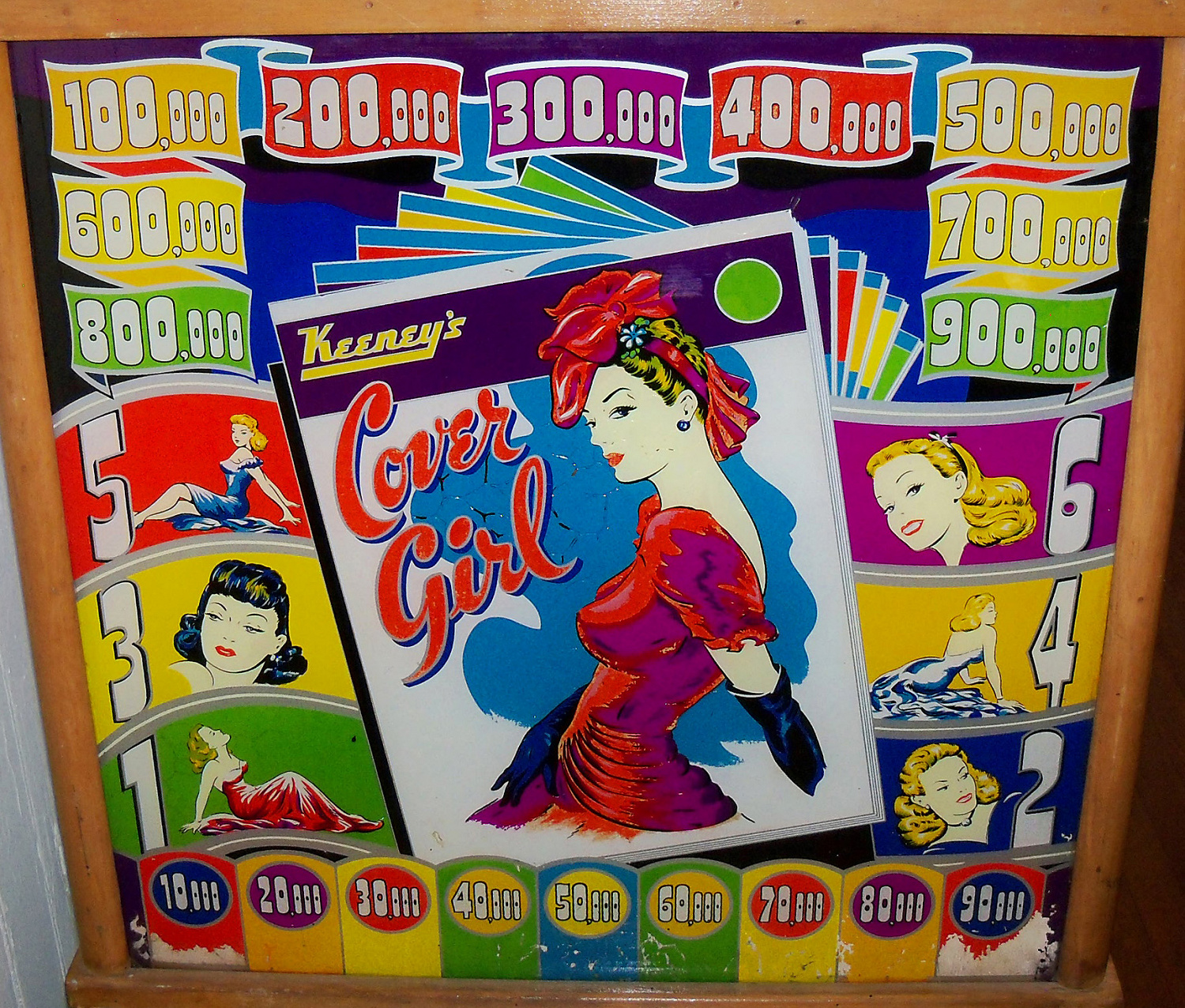
Cover Girl, released by Keeney, stands as a quintessential artifact of the electromechanical era, capturing the mid-century aesthetic that defined the arcade floors of its time. As a single-player machine, it offers a stripped-down, focused experience that relies on the raw, tactile satisfaction of relay-driven scoring and light-based progression. Without the complex modern toys or multi-ball modes of today’s machines, Cover Girl challenges the player to master the fundamentals of ball control and precise aiming to climb its ladder of scoring values.
The game is built around the standard five-ball play cycle, a hallmark of the period that demands consistency over long-form endurance. Because the machine lacks the digital complexity of contemporary titles, the strategy here is purely rhythmic: players must navigate the playfield to light up the various scoring thresholds, turning the machine into a test of patience and steady hand-eye coordination. It is a minimalist design that rewards the player for finding the “groove” of the flippers, proving that even without motorized ramps or magnets, a well-calibrated EM machine can provide a compelling, high-stakes challenge.