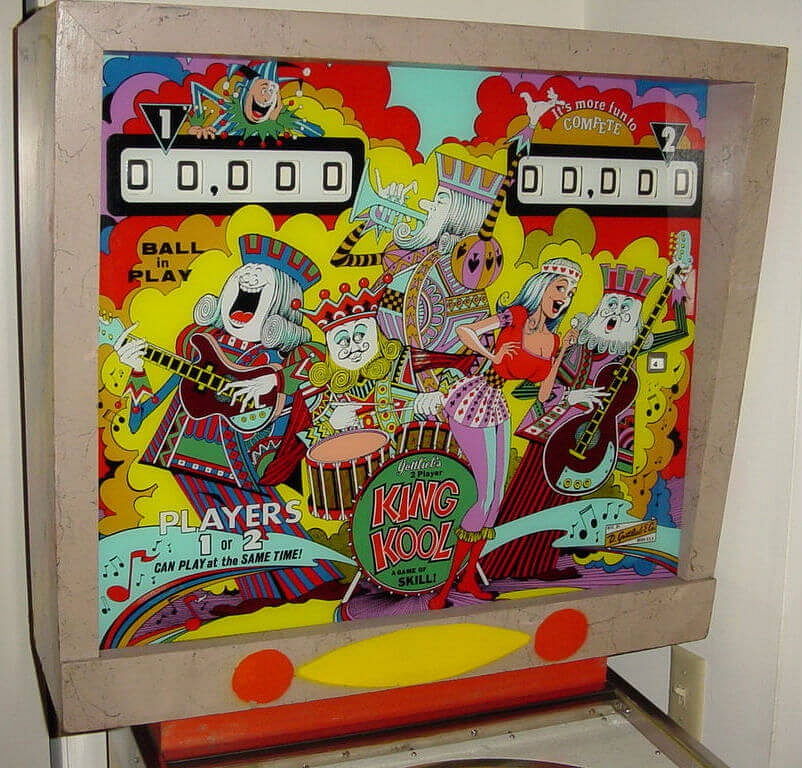
King Kool, released by Gottlieb in 1972, stands as a quintessential example of Ed Krynski’s design mastery during the transition into the golden age of electromechanical machines. Featuring iconic, vibrant art by Gordon Morison, the game leans into a jovial, music-inspired theme that belies its deceptive difficulty. Its most striking physical feature is the unconventional four-flipper layout; while this setup offers unique shot geometry, it also introduces the dreaded risk of “scissor drains,” where the ball can zip dangerously between flippers if the player isn’t careful.
Navigating the playfield requires a disciplined approach to the game’s scoring mechanics. The primary objective is to spell “K-I-N-G” via the standup targets, which serves as a force multiplier for your end-of-ball bonus, potentially climbing to a 3x multiplier during double-bonus scenarios. Players should also keep an eye on the twin spinning targets, which act as the engine for building that crucial bonus. While the center target is a high-stakes shot, aggressive players who manage to accumulate enough points will be rewarded with the activation of the right outlane gate, a life-saving feature that returns the ball to the plunger lane rather than letting it exit the playfield.
With over 3,300 units produced, King Kool remains a sought-after piece for collectors who appreciate the tactile, rhythmic flow of early 70s Gottlieb machines. It is a game of calculated risk; you are constantly balancing the need to build your bonus through the spinners against the peril of the center target and the unforgiving nature of those four flippers. Mastering the board requires a delicate touch and a keen eye on the outlane gate, making every session a tense, high-energy exercise in vintage skill.