
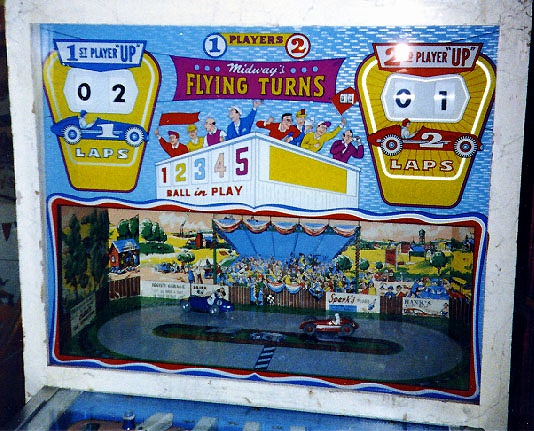
Flying Turns by Midway is a widebody electromechanical marvel that translates the high-octane thrill of vintage auto racing into a tactile, cabinet-bound spectacle. Featuring striking, era-appropriate cabinet and playfield art by George Molentin, this two-player EM machine utilizes its expansive widebody real estate to simulate the sweeping curves and dangerous banks of a classic racetrack. The true crown jewel of the machine is its kinetic backbox animation, where miniature race cars physically duel around a track, propelled by a system of magnets hidden behind the glass. This mechanical theater mirrors the action on the playfield, giving players a direct, real-time visual representation of their position in the race.
The playfield layout is a sprawling, open-ended arena defined by a pair of flippers and a strategic gauntlet of six kick-out holes. Rather than relying on the vertical ramps of later eras, Flying Turns focuses on horizontal ball control and precision pocketing. Landing the ball into the various kick-out holes serves as the primary engine for advancing your car in the backbox race. Each successful shot triggers the mechanical score reels with a satisfying clatter while simultaneously surging your magnetic racer forward, creating a brilliant loop of physical feedback.
For competitive players, success on this widebody giant requires a shift in strategy from standard EM play. The extra width of the playfield means the ball has more room to wander laterally, making wild flailing a quick ticket to a drain. Survival and high scores depend on deliberate, controlled shots aimed at cycling the ball through the six kick-out holes, combined with active nudging to keep the ball from settling into the dead zones. Midway’s Flying Turns remains a stellar artifact of electromechanical design, proving that before digital screens, pinball designers could conjure pure racing magic with nothing but gears, relays, and magnets.