
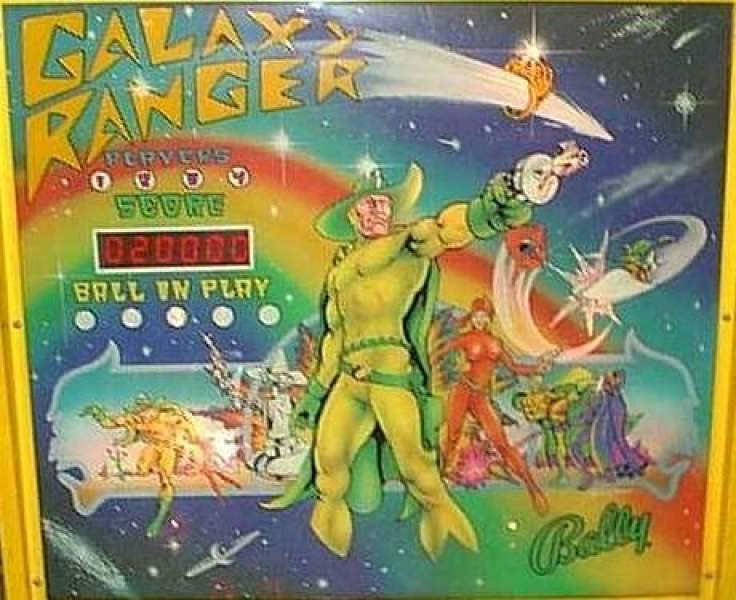
Galaxy Ranger, released by Midway as a dedicated home-market machine, serves as a fascinating footnote in the transition between electro-mechanical systems and the digital age. Eschewing the commercial complexity of arcade-bound cabinets, this space-fantasy title leans into a leaner, more focused playfield design. With art direction by the legendary Kevin O’Connor, the machine captures the quintessential 1970s sci-fi aesthetic, utilizing a vibrant, cosmic palette that feels like a pulp novel brought to life. It is an unpretentious piece of history that prioritizes approachable, fast-paced action over the deep rule-sets that would define the later solid-state era.
The mechanical layout is surprisingly nimble, centered around a three-flipper configuration that demands constant engagement. Rather than relying on massive motorized toys or intricate ball-locking mechanisms, Galaxy Ranger utilizes a pair of pop bumpers and dual rollunder spinners to create a frantic, rebounding flow. The playfield geometry is tailored for quick, reflexive shots, forcing players to master the timing of the upper flipper to navigate the orbit and maximize their multiplier potential. Despite its home-model status, the game retains that classic Midway “snap,” offering a tactile, responsive experience that rewards precision over raw power.
For those looking to conquer this interstellar trip, the key lies in mastering the spinners. Because the machine lacks the multi-ball chaos of modern pins, high scores are almost exclusively built through consistent lane control and milking the rollunder targets for every point they are worth. It is a game of rhythm; once you find the flow of the pop-bumper rebounds, the scoring potential increases exponentially. Galaxy Ranger remains a charming, minimalist challenge—a perfect example of how a few well-placed features can provide endless replayability without the need for a complex rule-sheet.