
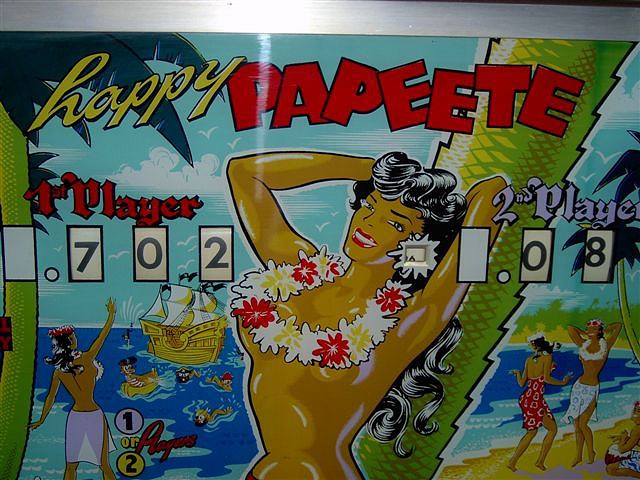
Happy Papeete, a 1960s-era release from the Italian manufacturer Rally, stands as a quirky, vibrant artifact of the EM (electromechanical) golden age. Eschewing the complex licensed themes of modern cabinets, this two-player machine transports the player to a colorful, whimsical vision of Papeete, blending a lighthearted tropical aesthetic with the distinct mechanical charm of the era. With its four flippers and a playfield packed with four active pop bumpers, the game demands a rhythmic, tactile approach to ball control that defines the classic arcade experience.
The mechanical layout is surprisingly dense for its time, utilizing a pair of rollunders and a strategic array of five standup targets to keep the gameplay lively. Unlike the fast-paced, high-tech flow of modern machines, Happy Papeete relies on the erratic, unpredictable physics of its passive bumpers and pop bumpers to punish or reward the player. The four-flipper configuration offers a unique geometry, allowing for varied shot angles across the reels-based display that tracks your progress through this sun-drenched, pirate-tinged island getaway.
For those looking to master this vintage gem, success hinges on navigating the rollunders while managing the high-traffic zones created by the clustered pop bumpers. Because the machine lacks the sophisticated ball-saving technology of today’s pins, the key is to prioritize steady, controlled shots at the standup targets to build your score, rather than relying on frantic flailing. It is a charming, straightforward piece of pinball history that serves as a reminder of when the industry was less about deep code and more about the raw, addictive satisfaction of keeping a steel ball in play.