
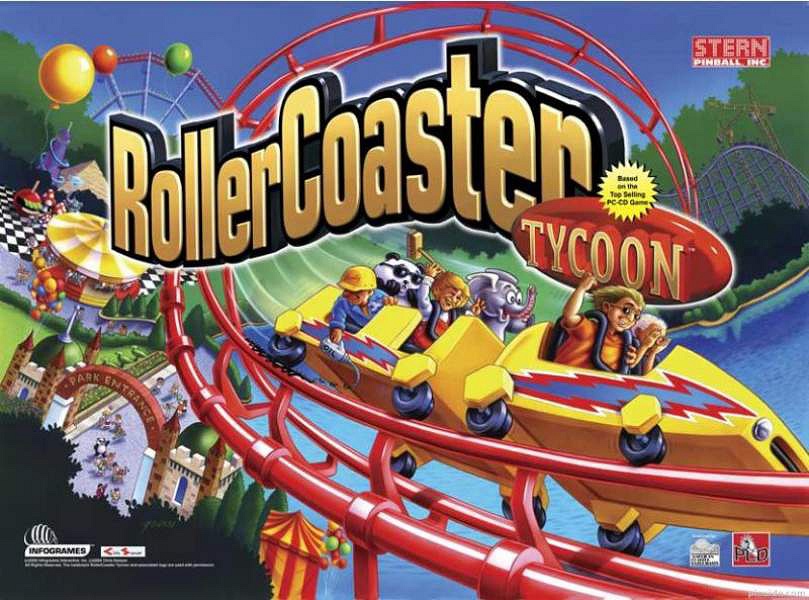
RollerCoaster Tycoon, released by Stern in 2002, serves as an ambitious digital-to-physical translation of the beloved theme park simulation franchise. Designed by the legendary Pat Lawlor, the table captures the manic energy of park management with a layout defined by four flippers and a suite of kinetic toys. The standout feature is undoubtedly the “Dunk the Dummy” mechanism—a solenoid-actuated troll doll that plunges into a water tank whenever the player strikes the corresponding target. With John Youssi’s vibrant art package and Chris Granner’s immersive sound design, the machine effectively translates the feeling of building a tycoon empire into the tactile, high-stakes world of pinball.
The gameplay centers on an intricate mode-based progression system, but savvy players know that not all attractions are created equal. While the game offers a variety of park-themed challenges, the “Power Ride” mode stands head and shoulders above the rest as the primary objective for high-scoring runs. Mastering the skill shot—specifically by plunging with enough finesse to kiss the back of the drop targets—is essential to cycling through the available modes until you lock in that lucrative Power Ride. Once you’ve established your rhythm, the center ramp becomes your lifeline, allowing you to relit modes and build your final wizard mode value based on the total number of guests you’ve managed to attract to your virtual park.
For those looking to dominate the leaderboards, discipline is key. Because the mode rewards are heavily skewed, competitive strategy dictates that players should intentionally time out the lackluster modes rather than wasting precious ball time on them. By focusing strictly on optimizing the Power Ride and managing the captive ball and drop target banks to keep the guest count climbing, you can turn this whimsical park simulation into a serious point-chasing machine. It is a classic Lawlor design that rewards deep knowledge of the ruleset and precise control over the flow of the game.