
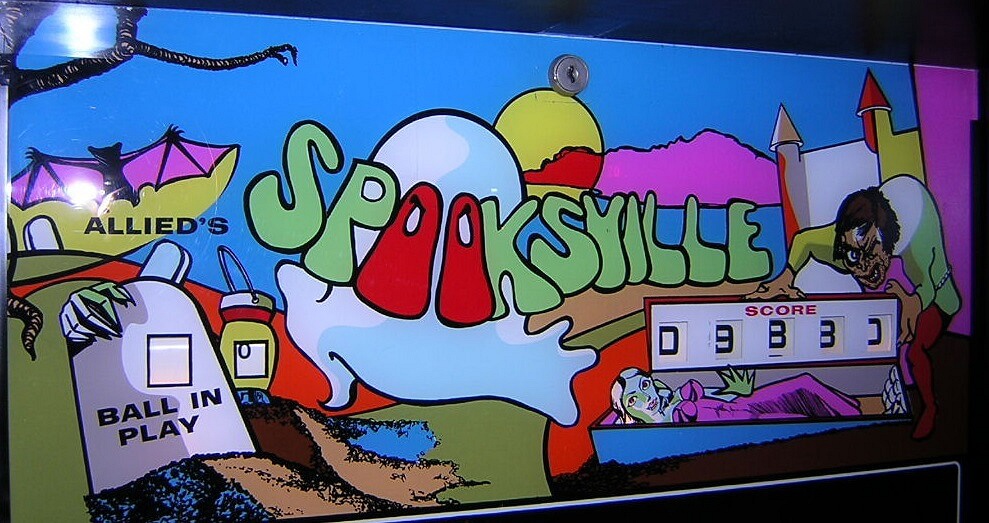
Spooksville, released by Allied Leisure in 1977, stands as a curious, macabre oddity from the twilight of the electromechanical era. Designed by Ron Halliburton with moody, atmospheric art by Roland Berrios, the machine leans heavily into a campy, supernatural aesthetic featuring a haunted cemetery populated by ghosts and zombies. Mechanically, it is defined by its status as a “shaker ball” machine, a unique departure from standard play that forces players to contend with a physics profile far less predictable than the typical steel-ball experience.
The playfield is a dense, cluttered graveyard of objectives, anchored by four distinct kick-out holes that act as the primary engines for scoring. With five standup targets and a quartet of pop bumpers scattered across the board, the game demands precise navigation to keep the ball from getting trapped in the periphery. While the two flippers offer standard control, the internal movement of the shaker ball requires a more tactile, reactive approach to nudging and timing, as the ball’s erratic behavior can quickly turn a routine shot into a chaotic drain.
Visually, the game captures the quintessential 70s horror vibe, using mechanical reels to track your progress as you attempt to escape its spooky confines. It is a niche, challenging piece of history that rewards players who can master its unusual ball physics rather than relying on the traditional, smooth-rolling flow of modern machines. For collectors and arcade historians, Spooksville remains a haunting reminder of the experimental spirit that defined the final years of Allied Leisure’s pinball production.