
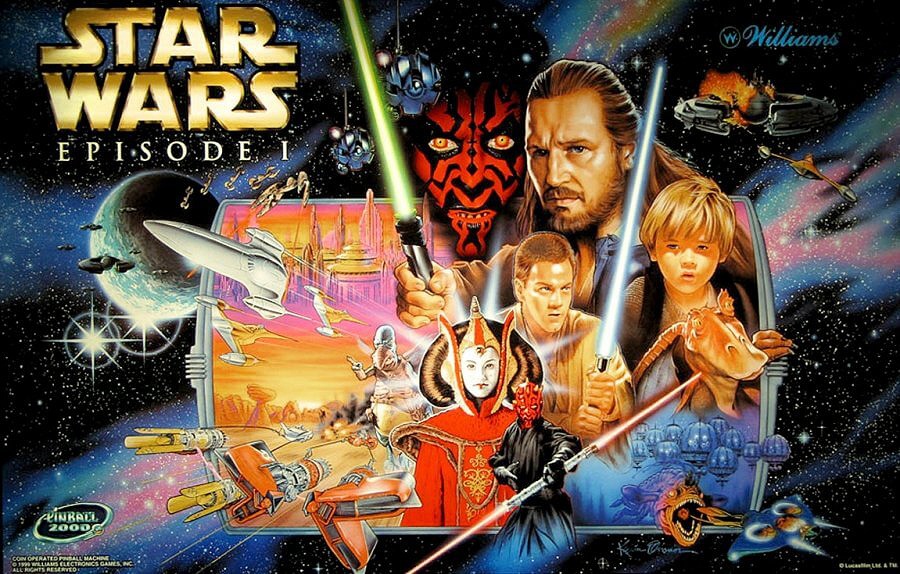
Star Wars Episode I, released by Williams in 1999, stands as a unique artifact in the pinball timeline, representing the ambitious Pinball 2000 hardware platform. Designed by John Popadiuk, this machine fuses a traditional playfield with a heads-up display system that projects holographic-style animations directly onto a transparent monitor integrated into the backbox glass. By overlaying vibrant digital graphics onto the physical movement of the ball, the game creates an immersive experience where the player feels like a Jedi pilot maneuvering through the chaos of the Trade Federation invasion.
The gameplay experience is defined by its strategic depth and interactive depth of field. Unlike standard machines, this table encourages players to take control of their progression; if you aren’t currently occupied by a mission, you can utilize the secondary side flipper buttons to cycle through and select your preferred mode, allowing for a customized approach to high scoring. Mastering the skill shot is equally vital, requiring a delicate, controlled plunge to navigate the ball through the target lane—a feat that rewards patience, as the game allows for unlimited gentle attempts to nail the perfect start.
Beyond the initial launch, success on this table often hinges on utilizing the auxiliary flipper buttons, which provide access to “free” shots during specific sequences, acting as a tactical edge for players looking to keep their combo multipliers alive. While it remains a polarizing entry due to its unconventional display technology, Star Wars Episode I remains a fascinatng case study in late-90s innovation. It transformed the pinball cabinet into a dynamic theater, proving that even in a galaxy far, far away, the most important element of the game remains the precision of your aim.