
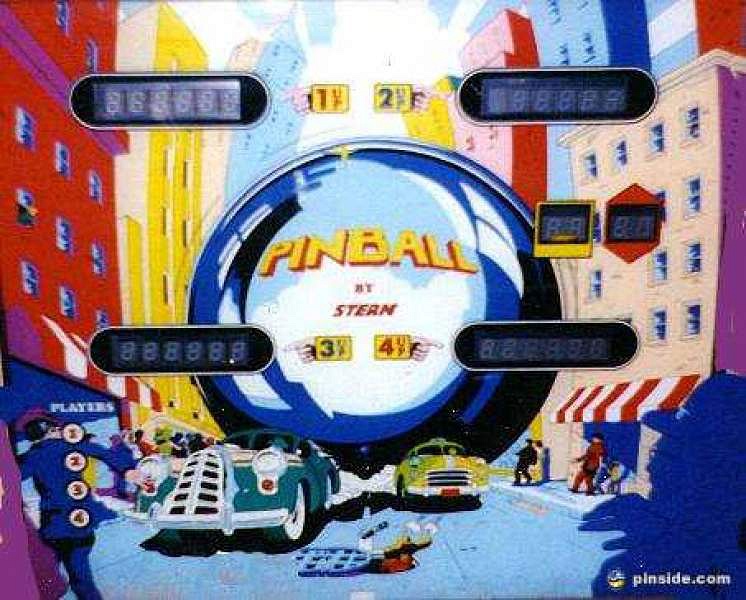
Stern Electronics’ 1977 release, simply titled *Pinball*, serves as a minimalist, self-referential time capsule from the dawn of the solid-state era. Designed by Mike Kubin, this four-player machine is a stripped-back exercise in pure arcade mechanics, eschewing the flashy pop-culture licensing that would come to define the industry decades later. Instead, the game leans into the tactile satisfaction of its era, utilizing a classic two-flipper layout that demands precision over spectacle.
The playfield is defined by an uncluttered, symmetrical geometry that keeps the focus squarely on ball control. A five-bank of drop targets anchors the center, providing a rhythmic, satisfying “clack” that rewards consistent shooting, while a spinning target adds a layer of unpredictable momentum to the mid-field. With three pop bumpers and dual kick-out holes strategically placed to punish sloppy play or reward well-timed shots, the game forces players to master the fundamentals. It is a deceptively simple design that highlights the transition from the mechanical ghosts of the past to the alphanumeric precision of the future.
With only 1,654 units ever produced, *Pinball* remains a rare, understated gem for collectors who appreciate the roots of the hobby. It lacks the complex mission trees or deep code of modern machines, but it succeeds by mastering the basics: the tension of the drop target reset, the frantic energy of the spinning target, and the constant threat of the outlanes. For those who enjoy a game that treats the sport of pinball itself as the theme, Kubin’s work remains an essential piece of arcade history.