
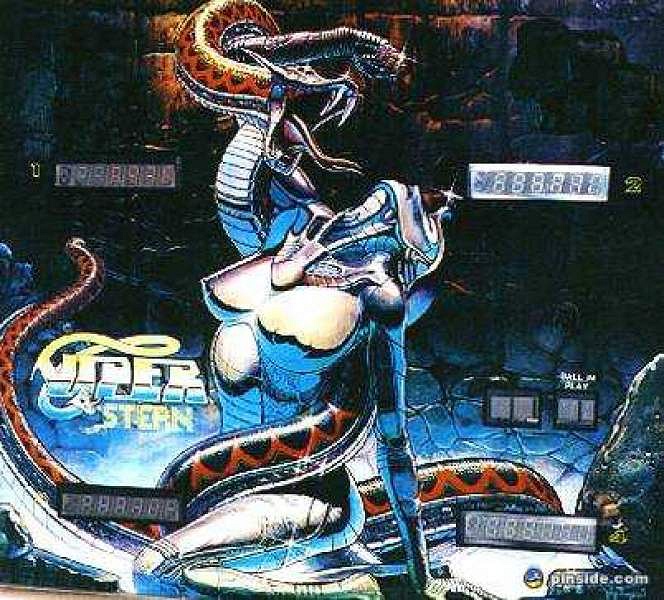
Viper, a 1981 widebody release from Stern Electronics, stands as a distinct, low-production curiosity in the company’s solid-state catalog. Designed by Joe Joos Jr. with striking art from Keith Parkinson, the game occupies a massive footprint that provides ample room for its centerpiece: a player-controlled turret. Unlike most machines where the flippers are your only means of interaction, Viper demands a shift in tactile focus. By navigating the ball into the top-center rollover, you claim command of the turret, using the flipper buttons to rotate and fire at targets, turning the pinball experience into a rudimentary, yet satisfying, shooter.
The gameplay loop centers heavily on managing multipliers, which serve the dual purpose of boosting both your bonus and playfield scoring. When you aren’t manning the turret, the playfield keeps you on your toes by cycling through unlit “X” targets; hitting these at the right moment is essential for driving up your score. Precision is key, as the only way to build your end-of-ball bonus is by targeting the standups located on the lower side of the turret mechanism. It is a game of patience and deliberate marksmanship rather than frantic flailing, requiring players to balance traditional ball control with the unique turret-based objectives.
Strategic depth on Viper is elevated by its persistent ball-lock system, where progress toward multiball is saved not just throughout your current game, but across multiple players and subsequent sessions. This makes the game a communal challenge in a location setting, as the work you put into the top-right lock area might just set the stage for the next person to step up to the glass. With only 438 units ever produced, Viper remains a rare and eccentric relic, offering a wide-open playfield experience that rewards those willing to master its unusual control scheme.