
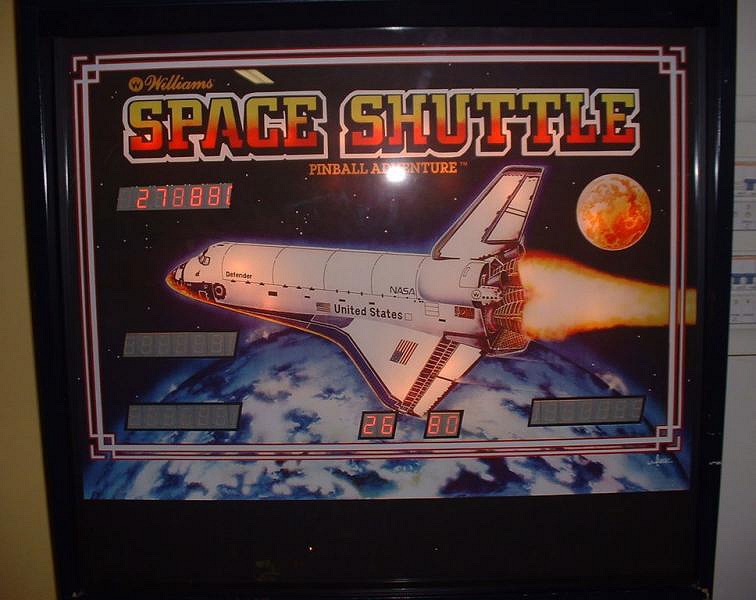
Space Shuttle, manufactured by Unidesa, serves as a high-stakes, space-age challenge that captures the tension of the 1980s exploration era. Unlike its contemporaries, this machine demands precision navigation across its playfield, utilizing a classic two-flipper layout to manage a frantic, multi-ball experience. The design revolves around the central shuttle ramp, a focal point that transforms from a simple path into a high-scoring frozen target once the multi-ball sequence is activated. With a combination of two kick-out holes and a strategic up-post between the flippers, the game forces players to balance aggressive scoring with careful ball management.
Gameplay depth is driven by the interaction between the drop targets and the playfield’s scoring potential. Completing the drop bank does more than just boost your score; it unlocks a gate in the right outlane, providing a crucial safety net that rewards disciplined shooting. Savvy players will prioritize the spinner, which, once properly leveled through target completion, becomes the engine for massive point accumulation. However, one must approach the center target with caution, as it remains a high-risk liability. A clever tactical maneuver involves locking a ball immediately after the target drops, which prevents it from resetting and effectively freezes the timer, allowing you to maintain control during your mission.
The machine’s mechanics are built for those who thrive on rhythm and timing. Whether you are focusing on the two-ball or three-ball modes, the integration of lane changes and the right-side detour gate encourages a fluid, looping style of play. By mastering the sequence of locking balls on the left and right before hitting that central ramp, you can command the board and keep the scoring momentum locked in. It is a quintessential example of solid-state engineering that favors technical accuracy over raw brute force, making every launch feel like a genuine test of orbital mechanics.