
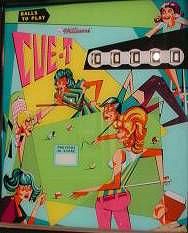
Cue-T, a 1968 release from Williams, stands as a classic example of Norm Clark’s mastery over the electro-mechanical era. With its billiards-inspired theme and distinctive Christian Marche artwork, the table captures the mid-century aesthetic of the pool hall while delivering a tight, challenging experience focused on the “add-a-ball” mechanic. Unlike the score-chasing heavyweights of later decades, Cue-T demands precision and tactical target management to extend your session, relying on a layout that features four pop bumpers and a pair of kick-out holes to keep the ball moving in unpredictable patterns.
The heart of the game revolves around completing the “A-B-C-D” target sequence, which serves as the gateway to the table’s most lucrative objective: the horseshoe lane. Scoring 500 points per loop, the horseshoe is the primary engine for high scores, making it a mandatory shot for any player looking to dominate the board. While the game provides simple point-scoring opportunities through the pop bumpers—activated by hitting specific targets—the real thrill lies in navigating the playfield to light the horseshoe for that elusive extra ball.
For those looking to climb the leaderboards, success on Cue-T requires a disciplined approach to the skill shot; plunging into the center top lane is essential to harvest an immediate 100-point boost. Advanced players should also keep a watchful eye on the ball even when it appears lost; dropping the flippers at the right moment can occasionally deflect a ball back into play, turning a near-drain into a continued run. Despite its age, Cue-T remains a quintessential test of rhythm and accuracy, rewarding those who can balance the tactical pursuit of the horseshoe with the frantic, old-school speed of a classic Williams build.