
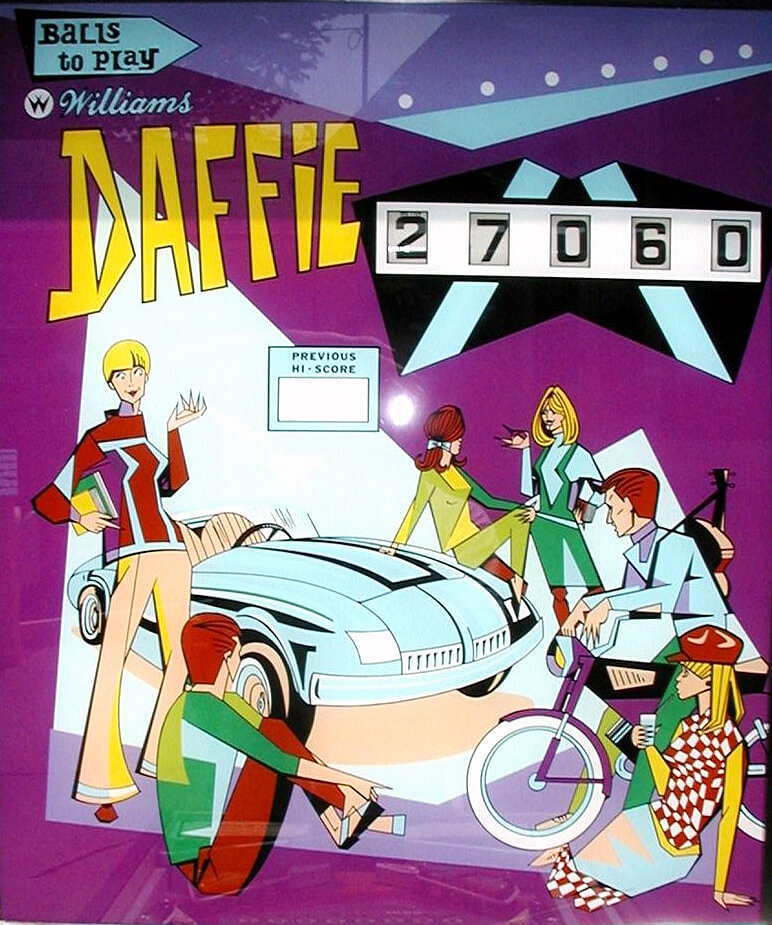
Daffie, a 1968 classic from Williams, stands as a quintessential example of Steve Kordek’s mechanical brilliance during the golden age of electromechanical machines. Featuring the iconic “zipper flipper” mechanism—a Kordek hallmark that allows the flippers to snap together to close the gap between them—this single-player title demands precision and a tactical approach to the playfield. With artwork by the legendary Christian Marche, the machine blends an automotive-inspired aesthetic with the high-stakes satisfaction of an add-a-ball system, offering a challenging experience that prioritizes ball control over raw power.
The layout is deceptively simple but rewards those who master the art of the backhand. To truly dominate the scoring, players should focus on the target in the upper left, which serves as a gateway to unlocking lucrative point opportunities. By skillfully backhanding this target, you can open the upper gate and navigate the playfield’s geometry to complete the 1-5 sequence. However, seasoned players know that completing the 1-5 set isn’t always the ultimate goal; holding off on that final completion while the 100-point pop bumpers are lit can lead to significantly higher scores, provided you can keep the ball away from the drains.
Success on Daffie relies on a disciplined plunge to secure the necessary rollovers, followed by a rhythmic, controlled assault on the standup targets. The machine’s reliance on add-a-ball mechanics keeps the pressure high, turning every successful shot into a chance to extend your session. It is a masterclass in mid-century design, proving that even with a modest set of features, a well-tuned machine can offer a deep, strategic experience that keeps collectors and competitive players coming back for just one more round.