
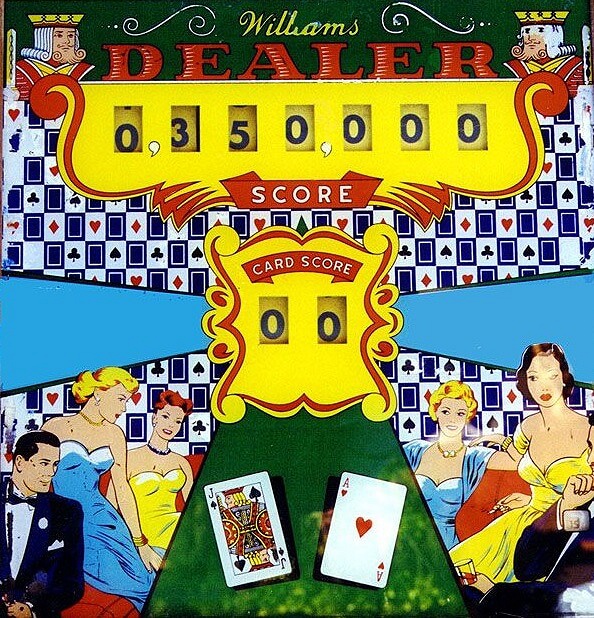
Dealer, a 1960 classic from Williams, stands as a quintessential example of Harry Williams’ mastery over the electro-mechanical era. With artwork by the legendary George Molentin, this single-player machine leans heavily into the high-stakes aesthetic of a casino floor, translating the tension of a blackjack table into the frantic, tactile experience of an EM pinball game. It is a stripped-back, honest machine that eschews modern gimmicks in favor of pure, rhythmic play, relying on its classic layout to provide a challenge that feels as timeless as a shuffled deck of cards.
The mechanical heart of the machine revolves around a traditional two-flipper arrangement, flanked by a strategic array of three pop bumpers and four passive bumpers that turn the playfield into a chaotic testing ground for ball control. Every shot is a gamble; the slingshots provide that signature, aggressive kick that Williams games of this period are known for, demanding precise aim to navigate the ball toward the scoring zones. While it lacks the complex toys of later decades, the machine’s charm lies in its simplicity—the mechanical reels clicking over as you rack up points, mirroring the escalating tension of a winning streak.
For those looking to master Dealer, the key lies in managing the unpredictability of the passive bumpers. Because they lack the active energy of the pop bumpers, they act as dead zones that can kill a clean shot or send the ball ricocheting into a drain if you aren’t prepared to nudge. The strategy here is patience; rather than swinging wildly, play the table like a seasoned card shark by controlling the ball’s pace and using the slingshots to your advantage. It is a brilliant, understated piece of history that proves you don’t need digital displays to capture the thrill of the house always winning.