
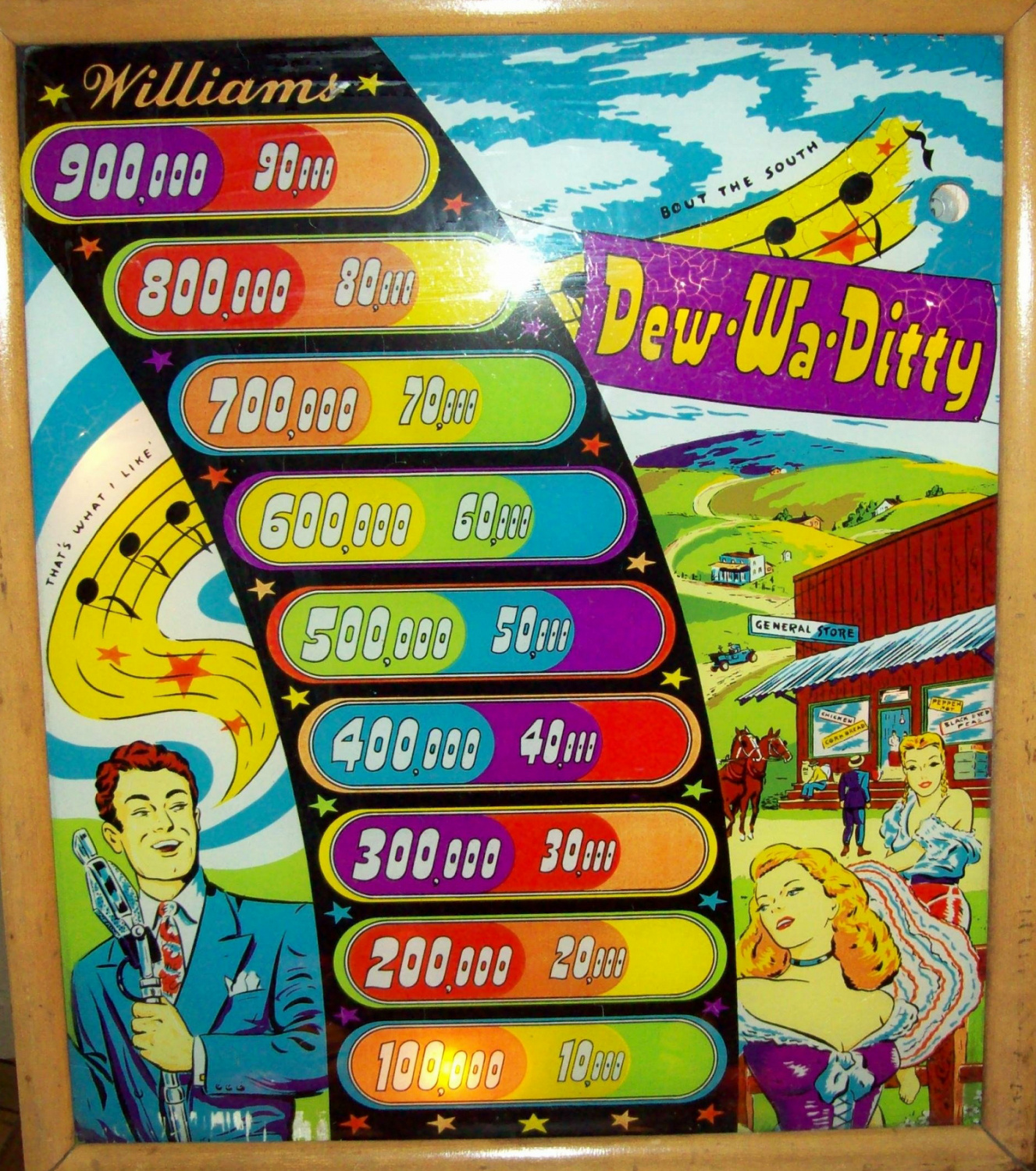
Dew-Wa-Ditty, released by Williams in 1964, stands as a charming relic of the mid-century electromechanical era. Designed by the legendary Harry Williams with whimsical, lighthearted artwork by George Molentin, the game leans into a theme of pure, simple happiness. Eschewing the complex multiball mechanics and digital deep-dives of the modern era, this single-player machine focuses on the tactile, rhythmic joy of the silver ball, offering five plays for a nickel—a standard of value that defined the arcade culture of its time.
The machine relies on a classic light-based display to track scoring and progress, stripping away the visual clutter of modern LCDs to focus the player’s attention entirely on the playfield. While it lacks the motorized toys and high-tech gimmicks of today’s boutique pins, Dew-Wa-Ditty captures a specific, melodic energy associated with the era’s pop-singing culture. It is a testament to an age where pinball was defined by elegant, minimalist geometry and the satisfying, mechanical “thwack” of relays firing behind the backglass.