
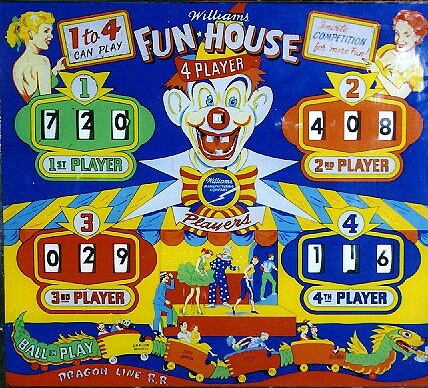
Fun House, designed by the legendary Harry Williams, stands as a quintessential pillar of the late-era electro-mechanical aesthetic, capturing the frantic, carnival-inspired energy that defined classic arcade play. With its whimsical theme revolving around the chaos of a circus funhouse, the machine relies on a tight, two-flipper layout that demands precision rather than brute force. The playfield is punctuated by three pop bumpers that keep the ball in constant, unpredictable motion, while the inclusion of three iconic gobble holes provides high-stakes risk-reward opportunities that can swallow a ball just as easily as they grant a massive point boost.
Mastering Fun House requires a strategic approach to the clock, which serves as the game’s primary engine for progression. While the allure of the skill shot is strong, seasoned players often eschew the initial plunge, opting instead to drive the ball directly into the pop bumpers to accelerate the clock and move toward the multiball phase as efficiently as possible. Once the multiball is triggered, the game shifts into a high-octane test of reflexes; the secret to dominating the scoreboard lies in utilizing the upper playfield area, specifically targeting the titular Rudy with the ball as it feeds off the left flipper to rack up millions in rapid succession.
The visual charm of the machine, bolstered by Roy Parker’s vibrant, classic art style, masks a deceptively difficult experience. The flow of the game rewards those who can consistently loop the ramps to advance time, turning the playfield into a rhythmic loop of jets and flipper control. Whether you are hunting for the jackpot or simply trying to survive the madness of the funhouse, the game remains a masterclass in how simple mechanics, when balanced perfectly, create an enduring, tournament-worthy challenge that feels just as fresh today as it did in the golden age of mechanical pins.