
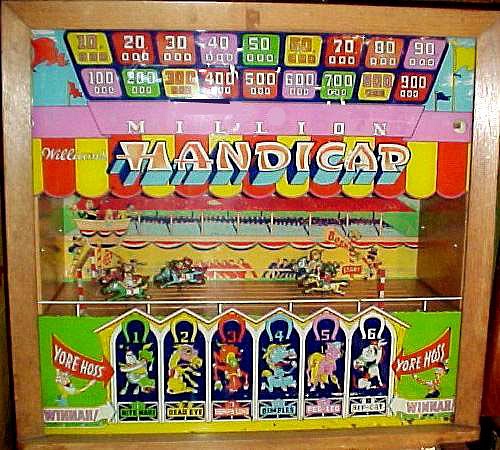
Handicap, a 1950s classic from Williams, stands as a quintessential example of the golden age of electromechanical design. Masterminded by legendary designer Harry Mabs with atmospheric art by George Molentin, this sports-themed machine transports players to the racetrack. Rather than relying on modern digital flair, the game leans into the tactile charm of its era, offering five balls for a nickel and focusing on the pure, rhythmic satisfaction that defined the mid-century arcade experience.
The machine’s standout attraction is its mechanical backbox animation, a marvel of mid-century engineering that brings the tension of a horse race directly into your line of sight. As you navigate the playfield, the backbox display tracks the progress of the competition, mirroring the excitement of the track with every successful target hit. It is a masterclass in minimalist design, proving that you don’t need complex multiballs or deep rule sets to capture the thrill of a photo finish.
For players looking to master Handicap, the strategy is grounded in the precision of the era: focus on consistent, clean shots to advance your “horse” through the backbox animation. Because the game relies on reel-based scoring and mechanical feedback, it rewards players who can maintain rhythm and control over the ball’s trajectory. It remains a fascinating relic for collectors, serving as a reminder of a time when the spectacle of a mechanical horse race was enough to keep a crowd cheering for hours.